Introduction
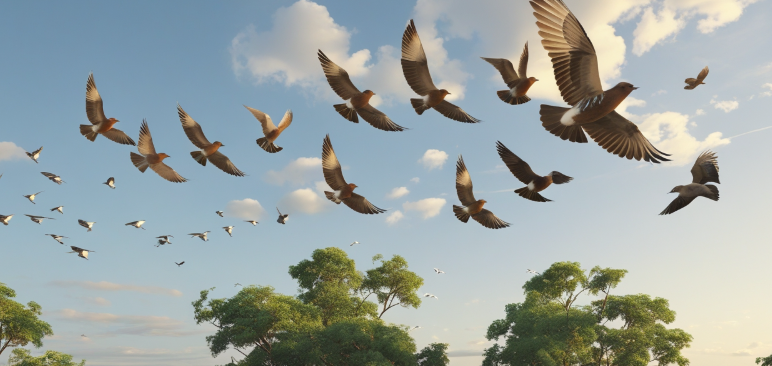
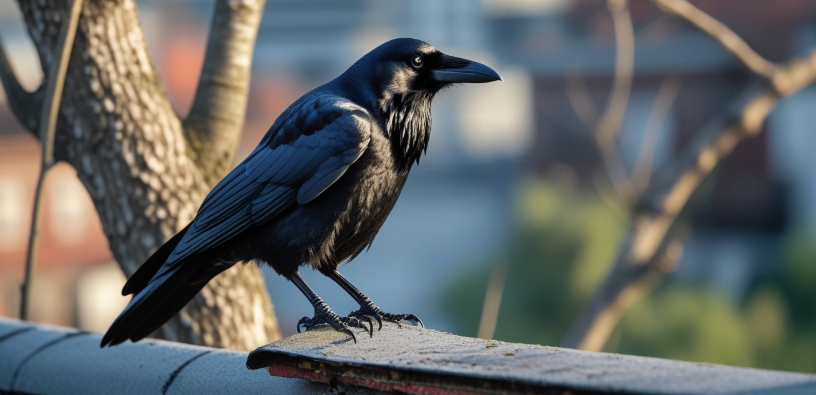
Every year, as seasons change, people notice something interesting in the sky. Some birds suddenly disappear, flying long distances to places far away, while others remain right where they are. You might see flocks heading south while familiar birds continue visiting your garden or rooftop as usual. This difference often makes people curious.
Why do some birds travel thousands of kilometers while others stay comfortable in the same area all year? The answer isn’t simple, but it’s very natural. Birds make decisions based on food, weather, safety, and survival. Migration isn’t about adventure—it’s about choosing the best place to live at the right time. Understanding this behavior helps us appreciate how smart and adaptable birds really are.
What This Behavior Is About
Bird migration is a survival choice.
Some birds move to find better conditions, while others already live in places that meet their needs year-round.
Main Reasons Some Birds Migrate While Others Stay
Availability of Food
Food is the biggest factor.
When insects, seeds, or fish become scarce due to cold or dry seasons, birds move to areas where food is still available.
Some places stay rich in food.
Weather and Temperature
Cold affects survival.
Birds that cannot handle low temperatures migrate to warmer regions, while birds adapted to cold stay behind.
Adaptation matters.
Nesting and Breeding Needs
Safe nesting areas are important.
Some birds migrate to find quiet, safe places to lay eggs and raise chicks.
Others already have ideal nesting spots.
Body Size and Energy Needs
Smaller birds lose heat faster.
They often migrate to avoid harsh conditions, while larger birds may conserve heat better and stay.
Body type plays a role.
Natural Instinct and Species Traits
Migration is inherited.
Some species are born with the instinct to migrate, while others are naturally non-migratory.
It’s part of who they are.
Why Some Birds Choose to Stay Back
Stable Local Environment
Some regions remain comfortable.
If food and shelter are available year-round, birds have no reason to leave.
Staying saves energy.
Human-Modified Habitats
Cities offer resources.
Food scraps, gardens, and warm structures allow some birds to survive without migrating.
Adaptation to humans helps.
Experience and Learning
Adult birds remember safe places.
If staying worked before, they repeat it.
Experience builds confidence.
Is This Normal or Something to Worry About?
This behavior is completely normal.
Birds have been migrating or staying back for thousands of years. Both choices are natural and necessary for different species.
Nature balances itself.
What Bird Lovers Can Learn or Do
Support local birds year-round.
Providing clean water and safe spaces helps birds that stay back, especially during tough seasons.
Small actions matter.
Common Myths vs Reality
Myth: All birds migrate
Reality: Many birds stay in one place.
Myth: Birds migrate because they enjoy traveling
Reality: It’s about survival.
Myth: Birds that stay back are weak
Reality: They are well-adapted.
Myth: Migration happens suddenly
Reality: It’s carefully timed.
Frequently Asked Questions
Do birds migrate every year?
Yes, most migratory birds follow yearly patterns.
Can a migratory bird decide to stay?
Some may, if conditions allow.
Do young birds know where to migrate?
Many follow instinct or adults.
Conclusion
Some birds migrate while others stay back because their needs are different. Migration helps birds escape harsh weather, find food, and raise their young safely. Birds that stay back live in places where food, shelter, and climate remain suitable all year.
Both choices show how adaptable birds are. Whether flying across continents or staying close to home, birds make decisions that help them survive. By understanding these patterns, we gain a deeper respect for the quiet intelligence of the birds sharing our world.