Introduction
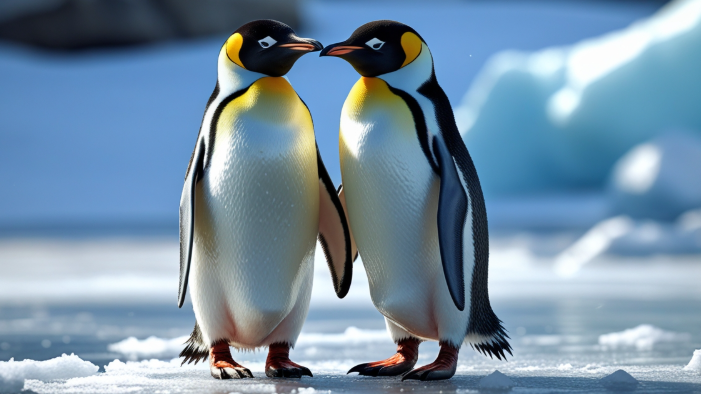
When people hear that penguins often stay with one partner for life, it sounds almost romantic. Images of penguins standing side by side in cold winds make the idea even more touching. But this behavior isn’t about romance the way humans understand it. It’s about survival, timing, and trust in one of the harshest environments on Earth.
Life for penguins is not easy. They face freezing temperatures, long journeys for food, and constant threats from predators. In such conditions, wasting energy on repeated mate searching would make survival harder. Over time, penguins developed strong pair bonds that help them raise chicks more successfully.
Understanding why penguins stay loyal to one partner helps us see how teamwork and consistency matter in nature. Their loyalty is practical, purposeful, and deeply connected to how they survive and raise their young year after year.
What This Behavior Is About
Penguin loyalty is about cooperation and efficiency.
Staying with the same partner helps penguins work together smoothly during breeding seasons. Familiarity saves time and energy.
In their world, trust equals survival.
Main Reasons Penguins Stay Loyal to One Partner
Raising Chicks Requires Teamwork
Penguin chicks need constant care.
One parent often guards the egg or chick while the other travels long distances to find food. Switching partners would disrupt this balance.
Teamwork keeps chicks alive.
Remembering Each Other Saves Time
Penguins return to the same breeding areas.
Finding a new partner every season would take time and energy. Recognizing a familiar partner allows breeding to begin faster.
Time matters in short seasons.
Surviving Harsh Weather Together
Cold conditions are extreme.
Penguin pairs rely on each other for warmth, protection, and shared responsibility. Working with a known partner reduces mistakes.
Familiar partners work better together.
Strong Memory and Recognition
Penguins can recognize their partners.
They use vocal sounds and behavior patterns to find each other among large colonies. Once bonded, recognition becomes easier each year.
Memory strengthens bonds.
Higher Success With Familiar Partners
Experienced pairs do better.
Partners that have raised chicks together before understand each other’s timing and behavior. This improves survival chances for future chicks.
Experience brings success.
Is This True for All Penguins?
Not all penguins stay together forever.
Some species are more loyal than others. If a partner doesn’t return one season, the remaining penguin may find a new mate.
Loyalty depends on survival, not rules.
What People Can Learn From Penguins
Penguin loyalty shows the value of cooperation.
It reminds us that strong bonds can form when working toward shared goals. Trust, consistency, and patience matter—especially during hard times.
Nature values teamwork over perfection.
Common Myths vs Reality
Myth: Penguins stay together for romance
Reality: Their bond is about survival.
Myth: Penguins never change partners
Reality: They do if necessary.
Myth: All penguins behave the same way
Reality: Behavior varies by species.
Myth: Loyalty means emotional attachment like humans
Reality: It’s practical and instinctive.
Frequently Asked Questions
Do penguins recognize their partner every year?
Yes, mainly through calls and behavior.
What happens if one partner doesn’t return?
The penguin may find a new mate.
Do penguins stay together outside breeding season?
Usually, they separate and reunite later.
Conclusion
Penguins staying loyal to one partner for life is less about romance and more about survival. In extreme environments, familiarity, trust, and teamwork increase the chances of raising healthy chicks. By staying with a known partner, penguins save energy, reduce stress, and work more efficiently together.
This behavior shows how nature values cooperation and consistency. While penguin loyalty may look heartwarming to us, it’s also a smart and practical strategy shaped by time and environment. Their partnerships remind us that strong bonds often grow from shared effort, patience, and the need to survive together.