Introduction

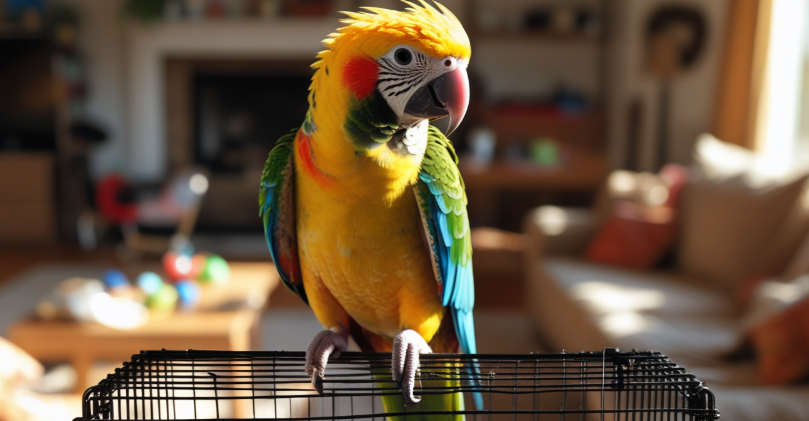
If you live with a parrot, you’ve probably noticed this curious behavior. You start talking, and your parrot slowly tilts its head to one side, watching you closely with one eye. Sometimes the tilt is quick and playful, other times it’s slow and thoughtful, as if the bird is trying to understand every word.
To many people, this looks adorable and almost human-like. It can feel as though the parrot is deeply listening or judging what you’re saying. While it may look funny, head tilting in parrots has real reasons behind it.
Parrots are highly intelligent birds with sharp senses. When they tilt their heads during conversation, they are actively processing information. This behavior helps them listen, see, and understand humans better in their own unique way.
What This Head-Tilting Behavior Is About
Parrots experience the world differently from humans. Their eyes, ears, and brains work together in ways that may look unusual to us.
Head tilting is a natural adjustment. It allows parrots to gather information more clearly by changing their angle of view and sound.
This behavior often appears during direct interaction, especially when a human is speaking clearly or using familiar words.
Main Reasons Parrots Tilt Their Head When Humans Talk
Focusing on Sound Direction
Parrots have excellent hearing, but sounds don’t always reach both ears equally.
By tilting their head, parrots adjust how sound enters their ears. This helps them figure out where the sound is coming from and pick up changes in tone or pitch.
When you speak, your parrot may tilt its head to hear you more clearly.
Getting a Better View of Your Face
Parrots often use one eye at a time to focus closely. Tilting the head helps them bring one eye into a better position.
This allows them to study your facial expressions, mouth movement, and eye contact. These visual cues help parrots understand what’s happening.
Your parrot isn’t just listening—it’s watching carefully.
Recognizing Familiar Words and Voices
Parrots can learn many human words and sounds. When they hear something familiar, their brain becomes more alert.
Head tilting often happens when a parrot is trying to match what it hears with words it already knows. This is especially common with names, greetings, or favorite phrases.
The tilt shows attention and recognition.
Reading Tone and Emotion
Parrots are very sensitive to emotional changes in human voices. They can tell the difference between calm, excited, or serious tones.
Tilting the head helps them focus on these emotional cues. They are trying to understand how you feel, not just what you say.
This is part of how parrots bond closely with people.
Curiosity and Learning
Parrots are naturally curious. When you say something new or unexpected, they want to understand it.
Head tilting helps them concentrate and learn. It’s a sign that their brain is actively working.
This behavior is common in young parrots and in birds that enjoy interacting with humans.
Encouragement From Human Reactions
Many humans react positively when parrots tilt their heads. Smiles, laughter, and extra attention often follow.
Parrots quickly notice this. Over time, they may tilt their heads more often because it leads to interaction.
This doesn’t make the behavior fake—it just becomes part of communication.
Why Some Parrots Tilt Their Heads More Than Others
Not all parrots show this behavior equally. Personality plays a big role.
Parrots that are more social, confident, or closely bonded with humans tend to tilt their heads more often. Birds that enjoy learning and interaction also show it frequently.
Each parrot has its own way of expressing attention.
Is This Normal or Something to Worry About?
Head tilting during conversation is completely normal for parrots. It’s a sign of focus, curiosity, and engagement.
As long as the behavior happens mainly during interaction and not constantly, there’s no cause for concern.
A brief head tilt followed by normal activity is a healthy response.
What Parrot Owners Can Learn or Do
When your parrot tilts its head, it’s a good moment to speak clearly and calmly. Use consistent words and friendly tones.
Responding gently helps strengthen trust and communication. You can even pause to let your parrot respond or mimic sounds.
Understanding this behavior helps you appreciate how much effort your parrot puts into interacting with you.
Common Myths vs Reality
Myth: Parrots tilt their heads because they’re confused
Reality: It usually means they are paying close attention.
Myth: Only talking parrots tilt their heads
Reality: Even non-speaking parrots show this behavior.
Myth: Head tilting is a trained trick
Reality: It’s a natural response that can be encouraged by interaction.
Myth: Parrots copy humans when they tilt their heads
Reality: The behavior helps with seeing and hearing, not imitation.
Frequently Asked Questions
Why does my parrot tilt its head only when I talk?
Because your voice is a key source of sound and information for your bird.
Do parrots understand everything humans say?
They understand tone, patterns, and some words, but not full language.
Should I encourage this behavior?
Positive interaction is fine, but there’s no need to train it intentionally.
Conclusion
Parrots tilt their heads when humans talk because they are actively listening, watching, and learning. This simple movement helps them hear sound direction, read facial expressions, and understand tone and familiar words.
Rather than being a cute habit alone, head tilting shows intelligence and attention. It’s one of the many ways parrots communicate and connect with the people they trust. The next time your parrot tilts its head while you speak, you’ll know it’s not just being charming—it’s truly engaged with you.