
Why Huskies Have Blue Eyes: The Real Scientific Reason
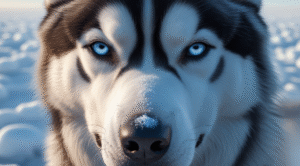
Huskies are admired worldwide for their wolf-like look, thick double coat, and powerful endurance. However, the feature that people notice instantly is their stunning blue eyes. These icy eyes look magical, and many believe they come from cold climates or ancient Arctic genes. But the real explanation lies in their unique genetic makeup.
A Genetic Mutation – Not a Climate Effect
Many people assume Huskies developed blue eyes because they lived in snowy regions. But scientific research proves that their eye color comes from a genetic mutation near the ALX4 gene on chromosome 18.
This mutation reduces pigment in the iris, allowing more light to scatter and creating that famous bright-blue shade. It doesn’t add color—it simply removes melanin in a specific area of the eye.
Understanding Pigment Reduction
Eye color in dogs is controlled by melanin:
- More melanin = brown eyes
- Less melanin = blue eyes
Huskies have normal pigment on their body and fur, but the ALX4 mutation lowers melanin only in the eyes—resulting in the clear, icy-blue appearance. This is not albinism and does not harm their vision.
Different Types of Blue Husky Eyes
Not all blue eyes look the same. Huskies can have:
- Light icy blue
- Deep ocean blue
- Greyish blue
- One blue and one brown eye (heterochromia)
- Split eyes (half brown, half blue)
Each variation depends on how much pigment is reduced in each eye, making every Husky distinct.
Heterochromia: A Safe and Natural Trait
One of the most eye-catching features in many Huskies is heterochromia—two different colored eyes. This happens when one eye inherits the blue-eye mutation while the other retains normal pigmentation. It is completely harmless and does not affect the dog’s vision.
Does the Blue-Eye Gene Connect to Their Ancestry?
Yes. Huskies originated from the Chukchi people of Siberia, who bred dogs that were strong, endurance-based, and adapted to freezing temperatures. The blue-eye mutation persisted through generations because it was present in their early genetic line, becoming a signature trait of the breed.
Do All Huskies Have Blue Eyes?
Surprisingly, no. While blue eyes are common, some Huskies have brown or amber eyes depending on the genetic combinations they inherit.
| Parent Combination | Possible Puppy Eye Colors |
|---|---|
| Both blue-eyed parents | Mostly blue, some brown |
| One blue, one brown | Blue, brown, or mixed |
| Both brown-eyed parents | Mostly brown, rare blue |
Even two brown-eyed Huskies can produce blue-eyed puppies if they both silently carry the ALX4 mutation.
Do Blue Eyes Affect Husky Vision?
No. Huskies with blue eyes have normal, healthy eyesight. Their eye structure is naturally adapted to snowy environments, helping reduce glare and enhance visibility.
Why People Love Blue-Eyed Huskies
Blue-eyed Huskies have become an internet sensation due to their expressive faces, friendly nature, and piercing gaze. Their appearance—combined with their playful, loyal, and energetic personality—makes them one of the most captivating dog breeds in the world.
Whether they have icy blue eyes, warm brown eyes, or a mix of both, Huskies continue to charm dog lovers with their beauty, intelligence, and unforgettable spirit.