Introduction
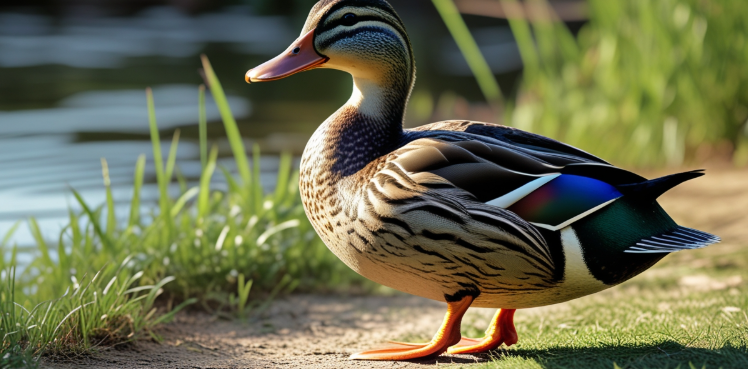
If you’ve ever watched ducks walking across a park, farmyard, or lakeside path, you’ve probably smiled at the way they move. Their side-to-side steps, short legs, and gentle wobble look funny and charming at the same time. Many people laugh and wonder why ducks walk like that while other birds seem to move so smoothly.
As pet owners, bird lovers, or even casual walkers by a pond, we often notice this unique walk but rarely stop to think about the reason behind it. Ducks aren’t clumsy or lazy walkers. Their waddling style is actually a natural result of how their bodies are built and how they live. Once you understand it, that funny walk starts to make perfect sense—and even feels impressive in its own way.
What This Behavior Is About
A duck’s waddling walk is not accidental.
It’s a result of body shape, leg position, and a lifestyle that is mostly designed for swimming rather than walking. Ducks are built for water first, land second.
Main Reasons Ducks Waddle When They Walk
Their Legs Are Set Far Back
Ducks’ legs are positioned toward the back of their bodies.
This placement is perfect for pushing through water but makes balancing on land harder. To stay upright, ducks shift their weight from side to side.
That creates the waddle.
Short Legs and Wide Bodies
Ducks have short legs and round bodies.
This combination limits long, straight steps. Instead, they take small steps while moving their body along with them.
It’s efficient for them.
Built for Swimming, Not Running
Ducks are excellent swimmers.
Their webbed feet and body shape help them glide through water easily. Walking is not their main strength, so their movement on land looks awkward to us.
In water, they look graceful.
Balance and Stability
The waddling motion helps ducks stay stable.
By rocking slightly, they keep their center of balance steady and avoid tipping forward or backward.
It’s a smart adjustment.
Energy Conservation
Waddling helps conserve energy.
The gentle side-to-side motion allows ducks to move without straining their legs or joints, especially over longer distances.
Slow and steady works.
Is This Normal or Something to Worry About?
This is completely normal.
All healthy ducks waddle. It’s not a sign of weakness, injury, or poor health. In fact, a smooth, steady waddle usually means the duck is doing just fine.
Only sudden changes in walking would be worth noticing.
What Pet Owners and Observers Can Learn
Ducks remind us that every animal moves differently.
What looks funny to humans is actually a well-adapted way of moving. If you keep ducks as pets, it’s best to provide safe, non-slippery ground so their walking stays comfortable.
Let ducks be ducks.
Common Myths vs Reality
Myth: Ducks walk funny because they are clumsy
Reality: Their walk is a natural body design.
Myth: Waddling means the duck is unhealthy
Reality: Healthy ducks waddle too.
Myth: Ducks prefer land walking
Reality: Ducks are more comfortable in water.
Myth: Waddling slows them down too much
Reality: It works well for their lifestyle.
Frequently Asked Questions
Do all ducks waddle when they walk?
Yes, all ducks waddle to some degree.
Why do ducks look graceful in water but awkward on land?
Their bodies are designed mainly for swimming.
Can ducks run if they need to?
They can move faster briefly, but it still looks like a faster waddle.
Conclusion
Ducks walk in a funny waddling style because their bodies are perfectly designed for life in and around water. Their leg placement, short steps, and wide bodies work together to create a walk that looks amusing but serves an important purpose. What seems awkward to us is actually a smart way for ducks to stay balanced and comfortable on land.
The next time you see a duck waddling by, you’ll know it’s not being silly or careless. It’s simply moving in the way nature designed it to—confident, balanced, and perfectly suited to its world.