Introduction
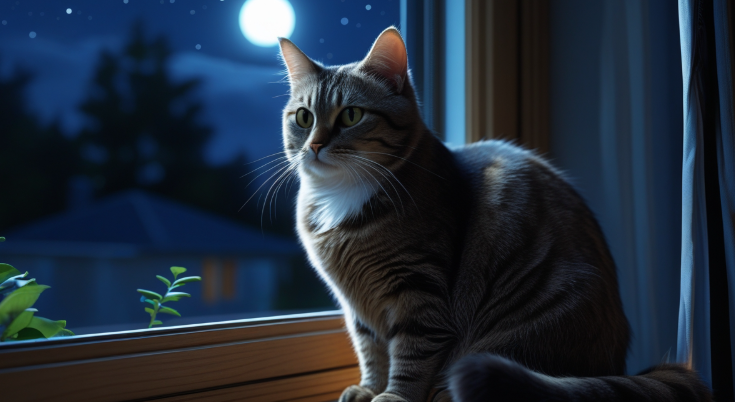
Many cat owners know this situation all too well. You finally get into bed after a long day, turn off the lights, and just as you’re about to fall asleep—your cat starts meowing. Sometimes it’s soft and gentle. Other times, it sounds loud, urgent, and impossible to ignore. You may even walk around the house trying to figure out what your cat wants.
Nighttime meowing can feel confusing and frustrating, especially when your cat seems fine during the day. Food bowl is full, litter box is clean, and nothing appears wrong. So why does this behavior suddenly increase after dark?
The answer is usually simple and natural. Cats experience the world differently from humans, and night brings out behaviors that are quiet or unnoticed during daylight. Understanding why cats meow more at night can help owners respond calmly instead of worrying or losing sleep.
What This Behavior Is About
Nighttime meowing is a form of communication.
Cats use their voice to express needs, feelings, and habits. At night, when everything is quiet, their sounds feel louder and more noticeable.
It doesn’t always mean something is wrong.
Main Reasons Cats Meow More at Night
Cats Are Naturally More Active at Night
Cats are not fully daytime animals.
They are most alert during early morning and nighttime hours. This natural activity cycle makes them more energetic when humans are trying to sleep.
Meowing is part of that active phase.
Seeking Attention or Company
At night, cats may feel lonely.
If you’re asleep and not interacting, your cat may meow to get your attention. Some cats simply want company or reassurance.
They don’t understand bedtime like humans do.
Hunger or Habitual Feeding Times
Cats remember routines.
If your cat is used to late-night snacks or early-morning feeding, they may meow to remind you. Even a small habit can turn into regular nighttime noise.
They associate meowing with results.
Boredom During Quiet Hours
Nighttime can feel dull for indoor cats.
With fewer sounds and movements, cats may become bored. Meowing becomes a way to create interaction or stimulation.
Especially true for playful or curious cats.
Increased Awareness in Silence
Everything feels louder at night.
Cats may hear outside noises, insects, or distant sounds that humans miss. These sounds can trigger alertness and vocal reactions.
They’re responding to what we can’t hear.
Is This Normal or Something to Worry About?
Yes, this behavior is usually normal.
Occasional nighttime meowing is common in cats of all ages. As long as your cat eats, plays, and behaves normally during the day, there’s usually no reason for concern.
It becomes worth attention only if the behavior suddenly changes or becomes constant.
What Cat Owners Can Learn or Do
Establish routines.
Play with your cat before bedtime to help release energy. Feeding slightly later in the evening can also help reduce night-time demands.
Avoid reacting every time they meow at night, as it can reinforce the behavior.
Common Myths vs Reality
Myth: Cats meow at night because they are unhappy
Reality: Often, they’re just active or bored.
Myth: Ignoring night meowing is cruel
Reality: Consistent routines are helpful.
Myth: Only old cats meow at night
Reality: Cats of any age can do this.
Myth: Night meowing means illness
Reality: Usually, it’s normal behavior.
Frequently Asked Questions
Why does my cat only meow after lights are off?
Nighttime triggers their natural active hours.
Should I get up when my cat meows at night?
Only if something seems truly wrong.
Can playtime reduce night meowing?
Yes, play helps release energy.
Conclusion
Cats meow more at night because their natural rhythm doesn’t match ours. While humans sleep, cats often become more alert, curious, and vocal. This behavior is usually a mix of instinct, habit, and communication rather than a problem.
By understanding why it happens, cat owners can respond with patience instead of frustration. A consistent routine, enough play, and calm responses can make nights quieter over time. Sometimes, nighttime meowing isn’t a complaint—it’s just your cat being a cat when the world finally slows down.