Introduction
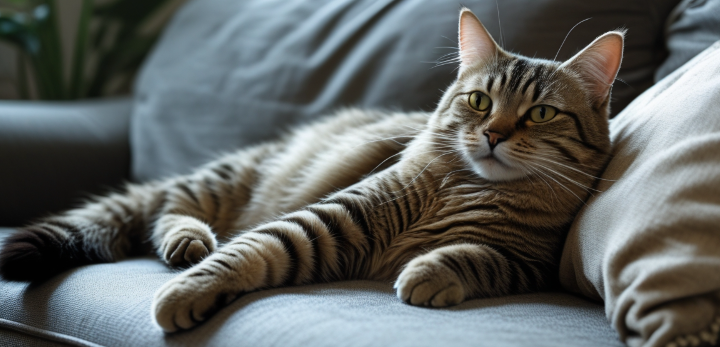
You’re sitting quietly, maybe watching TV or scrolling on your phone, and your cat is lying nearby looking completely relaxed. Eyes half-closed, body still, everything seems calm. Then you notice it—the tail starts flicking back and forth. Not wagging happily like a dog’s, just slow or sharp little movements. It can be confusing because your cat doesn’t look upset or playful.
Many cat owners wonder what this tail flicking really means. Is the cat annoyed? Thinking? About to jump up and run? Cats communicate a lot through body language, and the tail is one of their clearest signals.
Tail flicking while lying down is very common. It doesn’t always mean the same thing, but it always means your cat is reacting to something, even if it’s subtle.
What This Behavior Is About
Tail flicking is a form of communication.
Cats use their tails to express focus, emotion, and awareness. Even when resting, their minds are active.
The body may be relaxed, but the brain is busy.
Main Reasons Cats Flick Their Tails While Lying
Mild Irritation or Overstimulation
Small annoyances matter to cats.
A sound, movement, or even too much petting can trigger tail flicking. It’s often a polite warning rather than anger.
They’re saying, “I notice this.”
Deep Focus or Alertness
Cats are natural watchers.
Your cat may be tracking something you don’t see, like a moving shadow or distant noise. The tail moves as their attention sharpens.
Focus shows in the tail.
Thinking or Decision-Making
Cats pause before action.
Tail flicking can happen when a cat is deciding whether to move, play, or stay resting.
It’s a thinking signal.
Playful Excitement
Play doesn’t always look active.
A cat lying down may still be in play mode, especially if the tail flicks faster or more energetically.
Energy is building.
Emotional Expression
Cats feel more than they show.
Tail flicking can reflect mixed feelings—relaxed but alert, calm but curious.
It’s emotional balance in motion.
Is This Normal or Something to Worry About?
This behavior is completely normal.
Most cats flick their tails while lying down at some point every day. It’s part of how they process their surroundings.
It’s only a concern if paired with growling, hissing, or sudden aggression.
What Cat Owners Can Learn or Do
Watch the whole body.
Tail movement makes more sense when combined with ear position, eyes, and posture. Giving space when the tail flicks sharply can prevent scratches.
Respecting signals builds trust.
Common Myths vs Reality
Myth: Tail flicking always means anger
Reality: Often it means focus or mild irritation.
Myth: A resting cat should be completely still
Reality: Cats stay alert even when resting.
Myth: Flicking tail means the cat wants attention
Reality: Sometimes it means the opposite.
Myth: Cats flick tails for no reason
Reality: There’s always a trigger, even if subtle.
Frequently Asked Questions
Why does my cat flick its tail when I pet it?
It may be feeling overstimulated.
Is slow tail flicking different from fast flicking?
Yes, slow flicks often mean focus, fast ones mean irritation.
Should I stop touching my cat when the tail flicks?
If flicking becomes sharp or constant, giving space helps.
Conclusion
Cats flick their tails while lying down because they are reacting to their environment, emotions, or thoughts. Even when resting, cats remain alert and expressive. Tail movement is one of the clearest ways they communicate how they feel in the moment.
For cat owners, learning to read tail signals makes everyday interactions smoother and safer. A flicking tail isn’t bad behavior—it’s information. When you understand what your cat is telling you, you can respond with patience and respect, strengthening the quiet bond you share every day.