
Tiger Barb Fish Guide – Appearance, Care, Tank Setup & Behavior
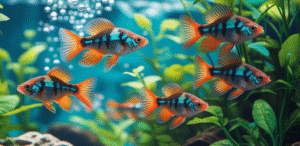
The Tiger Barb may be small, but its lively personality and striking colors make it one of the most exciting freshwater fish for any aquarium. Known for its bold stripes and energetic behavior, this fish brings both color and movement to a tank. Despite its size, the Tiger Barb is confident, fast, and full of charm.
1. A Striking Appearance That Stands Out
Tiger Barbs get their name from the four bold vertical black bands across their glowing golden-orange body. Under good lighting, their scales shimmer with a metallic shine, and their bright red or orange fins add an eye-catching contrast.
Popular Variants
- Green Tiger Barb – deep emerald body
- Albino Tiger Barb – pale gold with red eyes
- Glo Tiger Barb – neon glowing colors
- Black Tiger Barb – dark metallic shades
Each variation brings a unique look, yet all share the same energetic and playful nature.
2. Personality: Fearless, Fast, and Playful
Tiger Barbs are always active—swimming, chasing, and exploring their surroundings. Their boldness often surprises new aquarium keepers.
However, their playful nature can sometimes lead to fin-nipping, especially with slow or long-finned fish. They aren’t aggressive; they’re simply too active.
How to Reduce Fin Nipping
- Keep them in groups of 6 or more
- Provide plenty of swimming space
- Add plants or driftwood to divide territories
In a proper group, they keep their playful energy among themselves and leave other fish alone.
3. A Schooling Fish That Loves Company
When kept in a group, Tiger Barbs show their best behavior and brightest colors.
- Stronger colors
- Less nipping
- Natural schooling behavior
- More confidence
A big group moving together creates a stunning visual display in the tank.
4. Tank Setup: Creating the Perfect Home
Because they are fast swimmers, Tiger Barbs need a comfortable and spacious tank with open areas.
Ideal Tank Conditions
| Requirement | Details |
|---|---|
| Tank Size | Minimum 20 gallons (bigger recommended) |
| Temperature | 22°C – 27°C |
| pH Level | 6.0 – 7.5 |
| Water Hardness | Soft to moderate |
| Swimming Style | Fast and active |
Add live plants, rocks, and driftwood for natural hiding spots, but keep the center open for swimming.
5. Diet: What Tiger Barbs Love to Eat
Tiger Barbs are omnivorous and enjoy a varied diet:
- High-quality flakes or pellets
- Bloodworms
- Brine shrimp
- Daphnia
- Soft vegetables (spinach, peas)
A mixed diet helps boost their energy and maintain vibrant colors.
6. Breeding: Simple but Requires Preparation
Tiger Barbs can breed easily in home aquariums. When spawning begins:
- The male’s colors become deeper
- The female becomes rounder
They scatter eggs among plants or spawning mops. Since adults may eat the eggs, it’s best to remove them after spawning. Fry hatch in about two days.
7. Best Tank Mates for Tiger Barbs
Choose tank mates that can match their energy level.
Suitable Tank Mates
- Zebra Danios
- Rosy Barbs
- Rainbowfish
- Corydoras
- Loaches
Avoid These
- Angelfish
- Bettas
- Slow, delicate, or long-finned fish
Conclusion
The Tiger Barb proves that a small fish can have a big personality. With their bright colors, energetic swimming, and playful behavior, they make an excellent choice for lively community tanks. Provide a proper group size, an appropriate tank setup, and compatible tank mates, and they will thrive while adding motion and beauty to your aquarium.