The Snowy Owl: Arctic Hunter With Golden Eyes
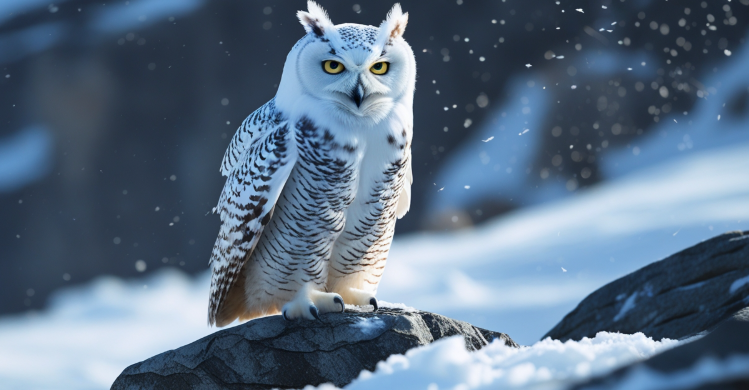
The Snowy Owl, with its bright white feathers and striking golden eyes, is one of the most iconic birds of the Arctic. Known for its silence, strength, and unmatched hunting skills, this owl thrives in some of the harshest conditions on Earth. Despite its beauty, the Snowy Owl is a fierce predator, built to survive freezing temperatures and endless miles of open tundra.
2. Appearance: White Feathers and Golden Eyes
The Snowy Owl’s appearance is not just beautiful — it is a perfect example of nature’s design.
- White Plumage: Provides camouflage in snow-covered landscapes
- Golden Eyes: Supports sharp daytime vision
- Large Wingspan: Up to 5 feet, enabling strong, silent flight
- Thick Feathers: Even the feet are insulated for extreme cold
The golden eyes are especially important because Snowy Owls are daytime hunters, unlike many other owl species.
3. Habitat: Master of the Arctic Wilderness
The Snowy Owl lives in wide-open, treeless environments such as:
- Arctic tundra
- Coastal plains
- Open fields during winter migration
These regions are cold, windy, and exposed — but this owl is perfectly adapted to survive them.
4. Hunting Style: Silent, Sharp, and Strategic
Unlike most owls, the Snowy Owl hunts during the daylight hours. It uses its powerful vision and silent wings to locate prey and attack with precision.
What Snowy Owls Hunt:
- Lemmings (their primary prey)
- Arctic hares
- Small birds
- Fish and insects
- Occasionally waterfowl in coastal regions
Their remarkable eyesight allows them to spot prey from great distances.
5. Special Adaptations of an Arctic Hunter
To survive extreme cold and long winters, the Snowy Owl has developed unique biological traits.
| Adaptation | Purpose |
|---|---|
| White feathers | Camouflage against snow |
| Thick plumage | Protection against –40°C temperatures |
| Golden eyes | Exceptional daytime vision |
| Strong talons | Catch prey hidden under snow |
| Silent flight | Stealthy hunting and avoiding detection |
6. Behavior: Calm but Highly Territorial
Snowy Owls may appear calm as they sit quietly on the ground, but they can become extremely territorial when needed.
- They defend their nests fiercely
- They patrol territory with low, powerful flights
- Males bring food for females during breeding season
- Migration patterns follow prey availability
7. Breeding and Nesting: Life in Harsh Climates
Snowy Owls build their nests directly on the ground, typically on raised areas for better visibility. When food is plentiful, they may raise up to 10 chicks.
Chicks are covered in soft grey fluff and quickly grow into capable hunters — an essential survival trait in the Arctic.
8. Why Snowy Owls Matter
The Snowy Owl plays a crucial role in maintaining Arctic ecological balance.
- They control rodent populations, especially lemmings
- Their population numbers reflect ecosystem health
- They are admired worldwide for their rare beauty
When lemming populations decline, Snowy Owl numbers drop too, making them important environmental indicators.
9. Conclusion: Beauty and Power in the Frozen North
The Snowy Owl is more than a stunning bird — it is a powerful predator shaped perfectly by the Arctic environment. With golden eyes, thick feathers, and incredible hunting ability, it thrives where few animals can survive.
Its presence in the wild is a reminder of nature’s extraordinary adaptability. The Snowy Owl truly stands as the silent ruler of the snow-covered wilderness.