Rose-Ringed Parakeet: The Smart Survivor of Urban Cities
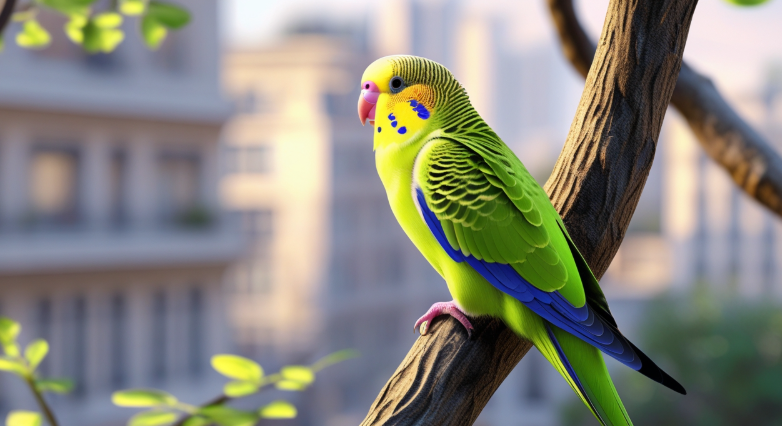
The Rose-Ringed Parakeet is one of the most recognizable birds in urban environments. With its bright green feathers, long tail, and distinctive rose-colored neck ring, this parakeet has adapted exceptionally well to life among buildings, traffic, and crowds.
Beyond appearance, it is admired for its high intelligence, strong social skills, and problem-solving ability, earning its reputation as one of the smartest city birds.
2. Origin and Global Spread
Originally native to South Asia and parts of Africa, the Rose-Ringed Parakeet has expanded far beyond its original habitat.
How It Spread
- Escaped or released pet birds
- Quick adaptation to new climates
- Flexible feeding and nesting habits
Today, they are common in parks, gardens, and city trees, living comfortably alongside humans.
3. Table: Why Rose-Ringed Parakeets Succeed in Cities
| Trait | Description | Urban Advantage |
|---|---|---|
| Intelligence | Learns patterns quickly | Avoids danger and finds food |
| Social behavior | Lives in flocks | Protection and cooperation |
| Diet flexibility | Eats seeds, fruits, grains | Uses human food sources |
| Nesting skill | Uses tree holes and buildings | Easy shelter access |
| Vocal ability | Loud and communicative | Maintains flock contact |
4. Intelligence and Problem-Solving Skills
Rose-Ringed Parakeets display impressive intelligence and curiosity.
- Recognize regular feeding times
- Memorize safe routes between trees and rooftops
- Solve simple problems to access food
- Observe and copy other birds
In captivity, they are famous for mimicking human words and sounds, showing advanced vocal learning abilities.
5. Social Life and Communication
Key Social Traits
- Travel in loud, active flocks
- Constant communication through calls
- Form strong lifelong pair bonds
- Cooperate during feeding
Although noisy, their calls are vital for coordination and safety in busy city environments.
6. Feeding Habits in Urban Areas
In cities, Rose-Ringed Parakeets take advantage of diverse food sources:
- Fruits from gardens and parks
- Seeds and grains from farms or markets
- Leftover food scraps
- Natural vegetation
This dietary flexibility allows them to survive even when natural food availability changes.
7. Seasonal Changes and Breeding
During breeding season, male parakeets display a distinct rose-colored neck ring.
- The ring becomes more visible with maturity
- Used to attract mates
- Signals health and dominance
Nesting usually occurs in tree cavities, but urban birds also use gaps in buildings, showing impressive adaptability.
8. Challenges and Human Interaction
Despite their success, these parakeets face challenges:
- Loss of nesting trees
- Competition with native bird species
- Noise complaints in residential areas
Their intelligence helps them navigate these challenges better than many other birds.
9. Why Bird Lovers Admire Them
- Bright and cheerful appearance
- Playful, curious behavior
- Strong family and flock bonds
- Fearless adaptation to human spaces
They have become a symbol of urban wildlife resilience.
10. Conclusion: A True Urban Survivor
The Rose-Ringed Parakeet is far more than a colorful bird. Its intelligence, social cooperation, and adaptability allow it to thrive in cities worldwide. As a successful urban survivor, it reminds us that nature can learn, adapt, and coexist even in the heart of modern human life.