
Rainbow Lorikeet — Friendly Guide for Pet Lovers (2025)
Bright, playful and social — everything you need to know to keep a healthy Rainbow Lorikeet. Practical tips, quick facts, and beginner-friendly care advice.
The Rainbow Lorikeet is a colorful, energetic parrot best known for its nectar-based diet, loud cheerful calls, and playful personality. They are ideal for owners who can provide time, space and daily interaction.
Appearance & Character
A bird painted by nature
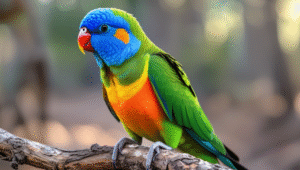
Rainbow Lorikeets wear the brightest colours—deep blue head, orange-red chest, and green wings. No two birds look exactly the same.
- Size: medium parrot, agile flyers
- Tail: long and tapered
- Special trait: brush-tipped tongue for nectar
Personality
Playful, curious and highly social. They often act like small entertainers—cheerful, noisy and always active.
Quick tip: Rainbow Lorikeets are best for owners who enjoy interactive daily care and have time for out-of-cage play.
Natural Habitat & Behaviour
Native to Australia and nearby islands, Rainbow Lorikeets live in forests, gardens and coastal regions. They travel in noisy flocks and feed mainly on nectar, soft fruits and pollen.
- Social structure: flock-living — they thrive in groups or with regular human interaction.
- Activity: very active during the day; enjoy flying and exploring.
- Voice: loud, cheerful calls — not a quiet bird.
Diet — Nectar & Fruit (Essential)
What they naturally eat: nectar, pollen, soft fruit and some blossoms. Their brush-tipped tongue is adapted for sipping nectar.
- Main portion: specially formulated lorikeet/pellet nectar or powdered nectar mixed to label instructions.
- Fresh fruit: papaya, mango, apple (small pieces), berries.
- Occasional treats: cooked sweet potato, mashed pumpkin.
Avoid feeding only seeds — lorikeets need a nectar-based or pellet-rich diet to stay healthy.
Feeding safety
- Avoid avocado, chocolate, caffeine and alcohol — these are toxic.
- Change fresh nectar/water daily — sugar water spoils quickly.
- Keep clean bowls: lorikeet droppings are wetter due to fruit/nectar diet.
Housing & Daily Care
Rainbow Lorikeets require space and stimulation. They are not ideal for very small cages. Provide safe out-of-cage time each day.
Cage & environment
- Choose a large aviary or cage — horizontal space for flight.
- Include perches, ropes, chew toys and foraging opportunities.
- Keep cage in a family area (not isolated) but away from drafts and kitchen fumes.
Interaction
- Daily out-of-cage time for 1–2 hours is ideal.
- Short training sessions (5–10 mins) using treats encourage bonding.
- Rotate toys weekly to avoid boredom.
Health & Common Issues
Rainbow Lorikeets are hardy when provided the right diet and clean environment. Watch for these common concerns:
- Nutritional deficiency: from poor diet (too many seeds).
- Feather plucking: usually stress or boredom-related.
- Respiratory problems: from dusty or smoky rooms.
Vet advice: choose an avian vet and schedule regular check-ups — early detection prevents big problems.
Why They Make Joyful Pets — Pros & Cons
Pros
- Extremely playful & affectionate
- Bright, photogenic colours
- Quick learners — can learn tricks & sounds
Cons
- Very noisy — not suitable for quiet households
- Need specialised nectar diet (more maintenance)
- Their droppings are watery — more frequent cleaning
Quick Facts
| Scientific Name | Trichoglossus moluccanus |
|---|---|
| Average Lifespan | 15–20 years (with good care) |
| Diet | Nectar, soft fruit, pollen — pellet/nectar mix recommended |
| Nature | Playful, social, energetic |
| Best For | Active bird-lovers, families who can provide daily time |
Final Thoughts
The Rainbow Lorikeet brings color, cheer and non-stop energy to a home. They reward owners with fun, intelligence and strong bonds — but they require commitment: the right diet, space, and daily interaction. If you can match their energy and care needs, a Rainbow Lorikeet makes a joyful, long-term companion.
If you want an HTML-ready version of this guide with alternate color palettes, table styles or a printable layout, send the word “design” and I’ll prepare a second version tailored for your blog or website.