
The Emu: Australia’s Fast-Running Giant
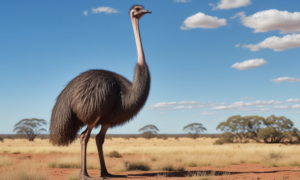
The emu is one of Australia’s most iconic birds, instantly recognizable by its towering height, powerful legs, and shaggy feathers. As the second-largest bird in the world, the emu may not be able to fly, but it more than makes up for it with incredible speed and endurance. This giant runner is perfectly adapted to Australia’s harsh landscapes, earning its reputation as a true survivor of the wild.
2. Origin and Natural Habitat
Emus are native exclusively to Australia, where they roam grasslands, open forests, savannas, and semi-arid regions. They prefer wide open spaces that allow long-distance travel in search of food and water.
Unlike many birds, emus are nomadic, often traveling hundreds of kilometers depending on seasonal rainfall and food availability. This adaptability allows them to thrive from coastal plains to inland deserts.
3. Built for Speed, Not Flight
Although emus have wings, they are far too small for flight. Evolution instead transformed them into powerful runners.
- Can run up to 50 km/h (31 mph)
- Long, muscular legs with three forward-facing toes
- Elastic tendons that conserve energy
- Capable of traveling long distances without exhaustion
This speed helps them escape predators such as dingoes in open terrain.
4. Physical Features That Make Emus Unique
A. Towering Size
Adult emus can grow up to 6.2 feet (1.9 meters) tall and weigh between 30–45 kg.
B. Shaggy Double Feathers
Emu feathers have a rare double-shaft structure that helps regulate body temperature, protecting them from both heat and cold.
C. Powerful Legs
Their legs are strong enough to break fences and deliver dangerous kicks when threatened.
D. Sharp Claws
Each foot has sharp claws used for defense, making emus surprisingly formidable birds.
5. Table: Emu Compared With Other Giant Birds
| Feature | Emu | Ostrich | Cassowary |
|---|---|---|---|
| Height | Up to 6.2 ft | Up to 9 ft | Up to 6.5 ft |
| Speed | 50 km/h | 70 km/h | 50 km/h |
| Native Region | Australia | Africa | Australia & New Guinea |
| Temperament | Curious, cautious | Aggressive | Highly aggressive |
| Ability to Fly | No | No | No |
6. Diet: What Keeps a Giant Running
Emus are omnivores, consuming a wide variety of food:
- Seeds and grasses
- Fruits and berries
- Insects and small invertebrates
- Occasionally small animals
They swallow stones to help grind food in their stomachs and can survive long periods without food by using stored body fat.
7. Parenting Role Reversal: Male Caretakers
- Females lay large dark-green eggs
- Males incubate eggs for about 8 weeks
- Males eat and drink very little during incubation
- After hatching, males raise chicks alone
This unusual role reversal is rare in birds and highlights the emu’s unique survival strategy.
8. Cultural Importance in Australia
The emu holds deep significance in Aboriginal culture, symbolizing endurance and survival. It also appears on Australia’s national coat of arms, representing forward progress—since emus cannot easily walk backward.
9. Conclusion: The Giant That Rules the Land
The emu is far more than a large bird—it is a symbol of speed, strength, and resilience. Perfectly adapted to Australia’s demanding environments, this fast-running giant thrives where many species struggle. With its powerful legs, unique parenting habits, and incredible endurance, the emu stands among nature’s most impressive ground-dwelling birds.