
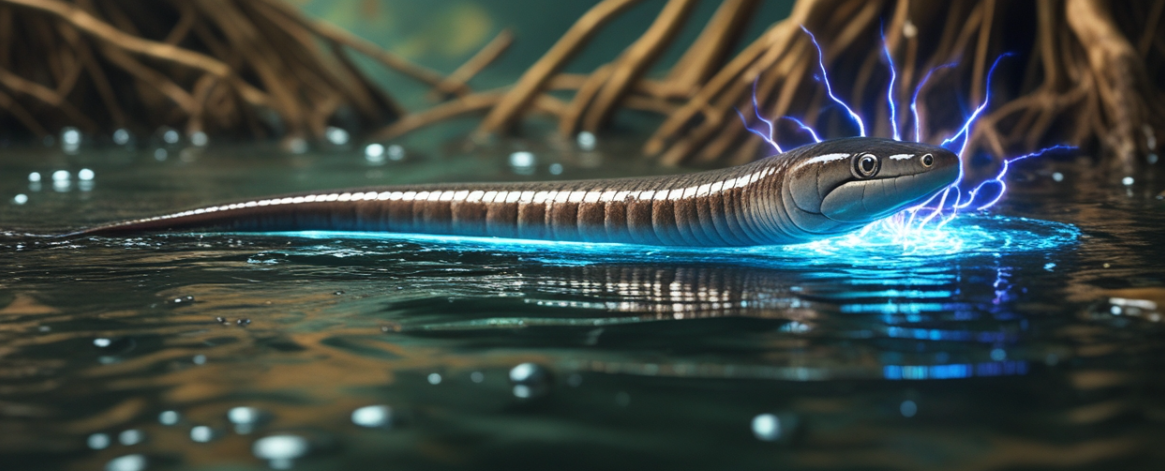
Electric Eel: Nature’s Shocking Predator

Electric eels have fascinated humans for centuries, not just for their unusual appearance, but for their ability to generate electricity strong enough to stun prey or defend themselves. Despite the name, they are not true eels. Belonging to the knifefish family, they inhabit the murky waters of the Amazon and Orinoco rivers. Their hunting techniques, body adaptations, and survival skills make them one of the most extraordinary freshwater fish.
1. Not a True Eel — A Common Misunderstanding
One surprising fact is that electric eels are not part of the true eel family. Here’s how they differ:
| Feature | Electric Eel (Knifefish Family) | True Freshwater Eels |
|---|---|---|
| Skeleton | More rigid, elongated | More flexible |
| Habitat | Amazon region, South America | Worldwide |
| Body Movement | Straight-line gliding | Snake-like swaying |
| Electricity | Yes, up to 600 volts | No electric organs |
2. How Electric Eels Produce Electricity
Electric eels generate electricity using three specialized organs along most of their body:
- Main organ – delivers the strongest shocks
- Hunter’s organ – used to locate prey
- Sachs organ – produces low-voltage pulses for navigation
Each organ contains thousands of electrocytes, tiny biological batteries. When discharged simultaneously, they can produce up to 600 volts, strong enough to stun large prey.
3. High-Voltage Hunting Strategy
Electric eels are strategic hunters, relying on electricity instead of chasing prey endlessly. Their typical hunting sequence:
- Low-voltage scanning to detect movement in dark waters
- Short electrical bursts to confuse or reveal hidden prey
- High-voltage strike to immobilize fish, frogs, or small mammals
- Quick swallow before the prey recovers
4. Breathing Air in Water
Electric eels have a remarkable adaptation: air breathing. They live in oxygen-poor water and must surface every few minutes.
- The mouth cavity acts like a lung, absorbing oxygen directly from air
- Provides nearly 80% of their oxygen intake
- Gives a survival advantage over other fish in the same habitat
5. Behavior and Temperament
Electric eels are usually solitary and prefer hiding under roots, muddy bottoms, or flooded forests.
- Move slowly but strike extremely fast
- More active at night
- Use low-voltage pulses continually to sense surroundings
- Defend fiercely when threatened but avoid unnecessary fights
6. How They Use Electricity for Communication
Electric eels also communicate using electrical signals:
- Warn rivals
- Attract mates
- Mark territory
- Coordinate during rare group activity
Scientists are still studying this electric language, discovering new behaviors annually.
7. Why Electric Eels Matter in Nature
Electric eels are vital predators, maintaining the balance of smaller fish and insect populations. They symbolize adaptability in harsh environments and inspire scientific research in:
- Battery and bio-energy storage design
- Robotic sensing systems
- Biological engineering studies
Electric eels are true marvels of nature — powerful, intelligent, and uniquely adapted for survival in challenging freshwater ecosystems. Their ability to generate electricity, hunt strategically, and communicate electrically makes them one of the most fascinating species in the aquatic world.