
The Cassowary: The World’s Most Dangerous Bird
In the dense rainforests of Australia and New Guinea lives the cassowary, a striking bird known for its vibrant colors—and its danger. Often called the world’s most dangerous bird, the cassowary is powerful, territorial, and equipped with natural weapons that make it formidable in the wild. Despite this reputation, cassowaries play an essential role in maintaining rainforest ecosystems.
2. What Makes a Cassowary Dangerous?
The cassowary is a bird built for survival and defense. While it typically avoids humans, it can cause severe injuries if threatened.
| Feature | Description | Why It’s Dangerous |
|---|---|---|
| Sharp claws | Middle claw up to 10 cm long | Can deliver deep slashing wounds |
| Powerful legs | Strong kicking muscles | Kicks can knock down adults |
| Helmet-like casque | Hard bony structure on the head | Helps push through vegetation or defend itself |
| High speed | Can run up to 50 km/h | Allows rapid, unexpected attacks |
These physical traits make cassowaries among the most powerful and potentially dangerous birds on Earth.
3. Cassowary Behavior: Territorial but Shy
Despite their fearsome features, cassowaries are naturally shy and prefer to remain hidden in dense forests.
- Solitary and elusive
- Defensive rather than aggressive
- Become bold when humans feed them
- Highly protective during breeding season
Learning their behavior reduces conflict between humans and cassowaries.
4. Why Cassowaries Attack
Most attacks occur when the bird feels threatened or cornered.
- Humans approaching too close
- Feeding by humans encouraging food aggression
- Dogs threatening or chasing them
- Protecting their chicks or nest
Cassowary attacks usually involve swift, powerful kicks using their razor-sharp claws.
5. Life in the Rainforest
Cassowaries are crucial to rainforest health. They eat more than 150 fruit species and spread seeds across vast areas.
| Role | How Cassowaries Help |
|---|---|
| Seed dispersal | Swallow fruits whole and spread seeds miles away |
| Forest regeneration | Help rare trees grow by distributing their seeds |
| Ecosystem balance | Support biodiversity through varied feeding |
Without cassowaries, many rainforest plants would struggle to survive.
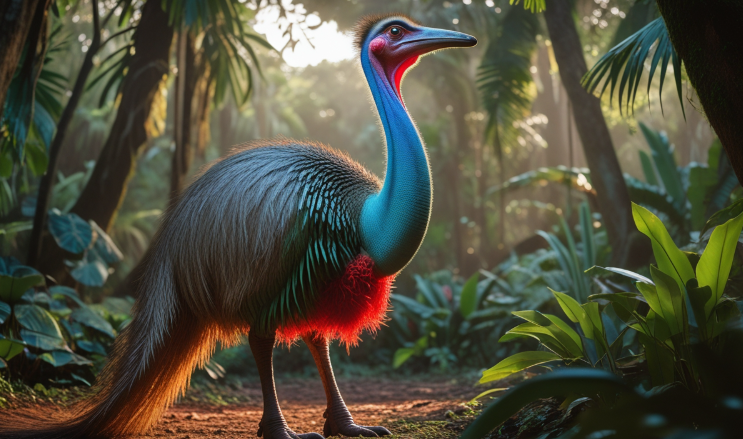
6. Cassowary Appearance: Beauty With Power
Cassowaries are visually stunning birds with bold colors and impressive size.
- Helmet-like casque: Helps navigate thick vegetation
- Long hair-like feathers: Provide protection from branches
- Bright blue neck and red wattles: Used for communication
- Muscular legs: Their strongest—and most dangerous—feature
7. Conservation and Protection
Despite their power, cassowaries are threatened due to habitat loss and human interactions.
- Preserve rainforest habitats
- Avoid feeding wild cassowaries
- Drive slowly in cassowary zones
- Support wildlife rescue efforts
- Maintain respectful distance from wild birds
8. Conclusion: Respect the Bird, Respect the Wild
The cassowary’s title as the world’s most dangerous bird comes from its powerful legs, sharp claws, and territorial instincts. Yet it is also a shy, essential, and beautiful creature that plays a vital role in rainforest ecosystems. By respecting cassowaries and understanding their behavior, humans can appreciate their wild nature while staying safe.
These magnificent birds remind us that nature’s power must be admired—from a respectful distance.


