The Bee-Eater Bird: A Rainbow-Colored Hunter of the Skies
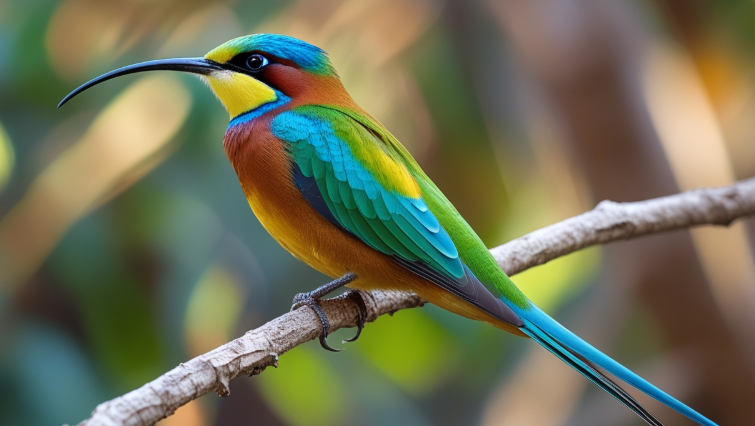
Among the world’s most striking birds, the Bee-Eater stands out with its rainbow-like feathers and incredible precision in hunting flying insects. Known for eating bees, wasps, and stinging insects, this species combines bright beauty with remarkable skill. Its vibrant colors and fascinating behavior make it a favorite among bird watchers and nature lovers.
2. Why Bee-Eaters Are So Colorful
Bee-Eaters are often described as flying jewels due to their brilliant shades of blue, green, yellow, chestnut, and gold. These colors serve important natural purposes rather than being random.
Color Traits & Their Purpose
- Bright Blue: Attracts mates during breeding season.
- Emerald Green: Helps blend into forest canopies for camouflage.
- Golden Yellow: Signals strong genetics and good health.
- Chestnut & Red Markings: Used for species recognition within groups.
The combination of pigments and structural coloration creates a shimmering, iridescent effect—especially visible in sunlight.
3. Unique Hunting Techniques: Catching Bees Mid-Air
The Bee-Eater is a true aerial hunter, catching insects while flying with incredible precision. Their methods showcase both agility and natural intelligence.
Hunting Highlights
- Launch from elevated perches to scan the sky
- Catch bees and wasps mid-air with perfect timing
- Strike prey against branches to remove stingers
- Swallow insects head-first
- Consume dozens of stinging insects daily
They also neutralize venom by squeezing the insect’s abdomen before eating—an incredible natural adaptation.
4. Habitat and Distribution
Bee-Eaters are widely found across Africa, Asia, Europe, and Australia. They favor places where flying insects are abundant.
Common Habitats
- Grasslands
- Riverbanks
- Open forests
- Dry savannas
- Farmlands
They frequently dig nesting tunnels in sandy or clay banks, creating long underground chambers to raise their chicks safely.
5. Social Behavior: Living in Colorful Communities
Bee-Eaters are highly social and live in large colonies. Their behavior shows cooperation and communication on many levels.
Behavioral Traits
- Travel and migrate in flocks
- Share perching branches peacefully
- Groom one another
- Practice cooperative breeding
- Warn the group about predators
Older siblings or relatives often help feed the young, showing rare and advanced family cooperation in the bird world.
6. Table: Quick Species Comparison
| Trait | European Bee-Eater | Blue-Cheeked Bee-Eater | Rainbow Bee-Eater |
|---|---|---|---|
| Main Color | Chestnut & Blue | Green & Blue | Multi-color Rainbow |
| Region | Europe, Africa | Africa, Asia | Australia |
| Size | Medium | Medium–Large | Small–Medium |
| Notable Feature | Loud Calls | Long Curved Bill | Vivid Mixed Shades |
7. Why Bee-Eaters Are Important to Nature
By consuming stinging insects, Bee-Eaters help maintain natural balance in ecosystems.
Environmental Benefits
- Reduce swarms of bees and wasps
- Control various flying insects
- Support agriculture by reducing crop pests
- Indicate a healthy, thriving environment
8. Threats and Conservation
While many Bee-Eater species are stable, others face threats such as:
- Habitat loss from farming and construction
- Declining insect populations
- Climate disruptions affecting migration
- Human disturbance to nesting tunnels
Conservation programs focus on protecting sandy nesting banks and preserving natural insect diversity.
9. Conclusion: A Bird of Beauty and Skill
The Bee-Eater is far more than a colorful bird. It is a master hunter, a cooperative family member, and an important part of the ecosystem. With its rainbow plumage, aerial hunting abilities, and social nature, the Bee-Eater stands among the most captivating birds in the world. Truly, it represents the perfect blend of beauty and brilliance in nature.