
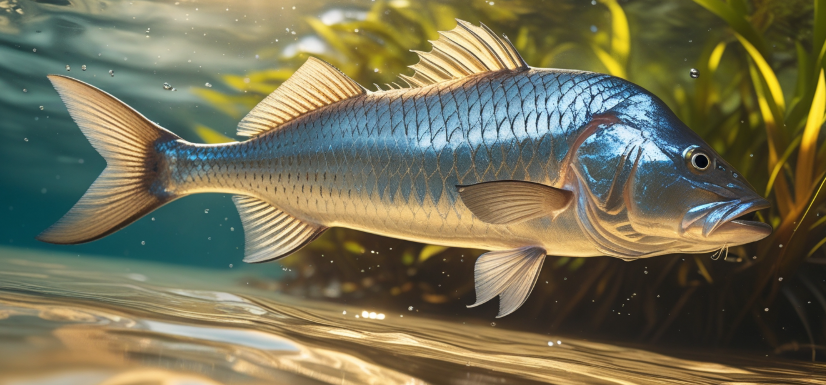
Barramundi: The Fish That Masters Freshwater and Saltwater

The Barramundi is one of the most fascinating fish in the aquatic world. Known for its impressive size, strength, and adaptability, this species has the rare ability to live comfortably in both freshwater and saltwater environments.
Found mainly in the Indo-Pacific region, barramundi are respected by anglers, fish enthusiasts, and researchers for their remarkable life cycle and survival skills.
2. Natural Range and Habitat
Barramundi are native to:
- Northern Australia
- Southeast Asia
- Papua New Guinea
- Coastal regions of South Asia
They inhabit rivers, lakes, estuaries, mangroves, and coastal waters. Their ability to regulate salt levels allows them to move smoothly between freshwater and saltwater environments.
3. Table: Barramundi in Different Water Types
| Environment | Life Stage | Purpose |
|---|---|---|
| Freshwater rivers | Juveniles | Growth and protection |
| Estuaries | Young adults | Gradual salt adaptation |
| Coastal saltwater | Mature adults | Spawning and feeding |
| Mangroves | Mixed stages | Shelter and hunting |
| Floodplains | Seasonal visitors | Access to food |
4. How Barramundi Adapt to Changing Water
The secret behind the barramundi’s success lies in its advanced physiological adaptations.
Key Adaptation Features
- Specialized gills that regulate salt intake
- Kidneys that adjust water balance
- Hormonal changes that prepare the body for migration
- Strong muscles for long-distance movement
These traits allow barramundi to shift environments with minimal stress.
5. Life Cycle: A Journey Between Waters
Barramundi follow a unique migratory life cycle:
- Eggs hatch in coastal saltwater
- Young fish migrate into rivers and lakes
- They grow and mature inland
- Adults return to saltwater to breed
This journey improves survival rates for juveniles and ensures successful reproduction.
6. Feeding Behavior Across Habitats
Barramundi are powerful ambush predators.
- Feed on smaller fish, shrimp, and crustaceans
- Use sudden bursts of speed to capture prey
- Adjust diet based on food availability
- Hunt near riverbanks, mangroves, and shallow waters
Their flexible feeding strategy helps them thrive in diverse environments.
7. Why Barramundi Are Considered Strong Survivors
- Tolerance to wide temperature changes
- Ability to survive low-oxygen waters
- Rapid growth rate
- Strong immune system
These traits make barramundi one of the most resilient fish species.
8. Importance in Ecosystems
Barramundi play a vital role in aquatic ecosystems:
- Control populations of smaller fish
- Maintain balance in river and coastal food chains
- Act as indicators of healthy waterways
Their presence often signals good water quality and ecosystem stability.
9. Human Connection and Cultural Value
- Highly valued by recreational fishers
- Important in regional cuisines
- Featured in local traditions and folklore
- Studied for migration and adaptability
Their ability to move between waters symbolizes strength and versatility.
10. Conclusion: A Master of Adaptation
The barramundi is a fish that truly belongs to both freshwater and saltwater worlds. Through biological adaptation, intelligent migration, and flexible behavior, it survives where many species cannot.
From quiet rivers to open seas, the barramundi’s journey reflects the power of evolution and aquatic resilience.