
Introduction
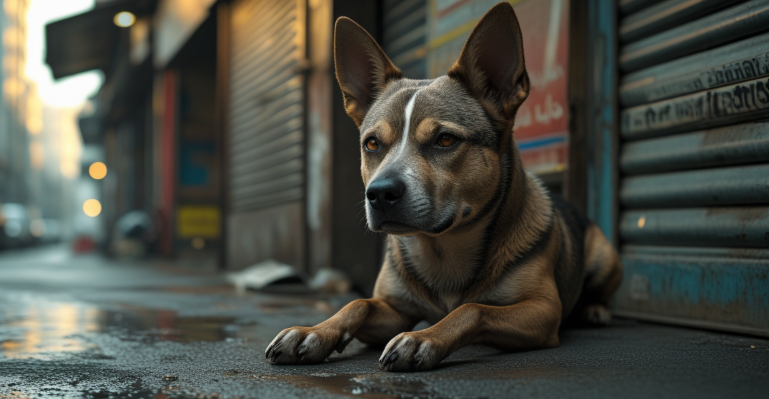
Every night, when shop shutters come down and the streets grow quiet, a familiar shape settles near the entrance of a small local shop. It’s not a security guard or a hired watchman. It’s a street dog—calm, alert, and always in the same spot. People passing by late at night began to notice that the dog never left, no matter the weather.
During the day, the dog wanders the neighborhood like any other stray. But as evening approaches, it returns to the shop, lies near the doorway, and keeps watch until morning. The shop owner never trained the dog or asked for protection. It simply happened on its own.
This simple, steady routine caught the attention of locals. Over time, the street dog became more than just a familiar face—it became a quiet guardian. This is the story of a street dog that chose loyalty and routine without being asked.
What This Story Is About
This story is about a street dog that formed an unspoken bond with a local shop and its owner. Without commands, payment, or shelter, the dog decided to guard the shop every night.
It didn’t bark constantly or act aggressively. Instead, it stayed alert, watched unfamiliar movement, and reacted only when something felt wrong. Its presence alone was enough to make people pause.
The dog wasn’t owned, trained, or restrained. Yet night after night, it returned to the same place, turning a simple storefront into something it felt responsible for.
How the Dog First Started Staying There
The shop owner remembered the dog showing up one evening during closing time. The dog sat nearby, watching quietly as the shutters were pulled down.
At first, it seemed like coincidence. Street dogs often rest wherever they find shelter. But the next night, the dog was there again. And the night after that.
Soon, it became clear this wasn’t random. The dog arrived around the same time every evening and left shortly after sunrise.
Why the Dog Chose This Shop
A Sense of Safety
The shop offered a dry space near the entrance and protection from passing traffic. For a street dog, safety matters.
The doorway became a reliable resting place where the dog could relax while still staying alert. Feeling secure encouraged the dog to return.
Once a place feels safe, dogs often claim it as part of their routine.
Kindness From the Shop Owner
The shop owner never chased the dog away. Occasionally, leftover food or water was placed nearby.
There were no expectations—just quiet acceptance. For street dogs, kindness leaves a strong impression.
That small gesture helped build trust and familiarity.
Familiar Sounds and Smells
The shop had a consistent daily rhythm. Opening in the morning, closing at night, and regular human presence.
Dogs are creatures of routine. Familiar sounds and smells help them feel grounded.
The shop became part of the dog’s known world.
How the Dog “Guards” the Shop
Quiet Alertness
The dog didn’t bark without reason. It stayed calm but watchful, lifting its head at unfamiliar footsteps.
If someone lingered too long near the shutter, the dog would stand up and stare, making its presence known.
That alone was often enough to discourage trouble.
Recognizing Regular Faces
Over time, the dog learned who belonged in the area. Regular neighbors and night walkers were ignored.
Strangers behaving unusually were watched closely. This awareness came naturally, not through training.
Dogs quickly learn patterns in human behavior.
Staying Through the Night
Rain, cold, or heat didn’t stop the dog. It stayed through all conditions, leaving only when morning activity returned.
This consistency is what made people notice. The dog wasn’t passing time—it was committed.
Is This Normal Behavior for Street Dogs?
Yes, this kind of behavior is more common than many people realize. Street dogs often form strong attachments to specific places or people.
When a location provides safety, routine, and kindness, dogs may naturally take on a protective role.
They don’t think of it as “guarding.” They’re simply watching over what feels like theirs.
Why Dogs Show Loyalty Without Ownership
Natural Territorial Instinct
Dogs are naturally aware of their surroundings. When they spend enough time in one place, they begin to treat it as part of their territory.
Protecting that space comes instinctively, even without training.
Emotional Bonds
Dogs don’t need ownership papers to feel connection. Repeated positive experiences build emotional bonds.
The shop, the owner, and the routine became meaningful to the dog.
Purpose and Routine
For street dogs, life can be unpredictable. Having a nightly routine gives structure and purpose.
Guarding the shop gave the dog something stable to return to every evening.
What the Shop Owner and Locals Did
The shop owner never tried to chain or relocate the dog. Respecting its choice was important.
Locals began leaving water bowls nearby. Some greeted the dog quietly, knowing it preferred calm interaction.
No one disturbed its nighttime role. The dog was allowed to be exactly what it chose to be.
What People Can Learn From This Story
This story shows that loyalty doesn’t always come from ownership. Sometimes it comes from trust and routine.
Street dogs are often seen as background figures, but they observe, remember, and respond to kindness deeply.
Simple acceptance can lead to strong bonds. No commands were given, yet responsibility appeared.
Common Myths vs Reality
Myth: Street dogs don’t care about places or people
Reality: Many street dogs form strong attachments.
Myth: Dogs guard only when trained
Reality: Protective behavior can be instinctive.
Myth: Stray dogs are unreliable
Reality: Consistency and loyalty are common when trust is built.
Myth: Feeding a dog makes it dependent
Reality: Kindness often builds mutual respect, not dependency.
Frequently Asked Questions
Why didn’t the dog leave after a few nights?
The shop offered safety, routine, and familiarity.
Did the shop owner adopt the dog?
No, the dog remained free and chose to stay on its own.
Do street dogs recognize “their” area?
Yes, many street dogs develop strong awareness of specific places.
Conclusion
The story of the street dog guarding a shop every night is a quiet reminder of how deeply animals respond to stability and kindness. Without being asked or trained, the dog chose a place and stayed loyal to it.
This wasn’t about rewards or ownership. It was about trust, routine, and feeling safe. In a world that often overlooks street animals, this dog showed that loyalty can grow in the simplest ways. Sometimes, all it takes is a little space, a little kindness, and the freedom to choose.