The Shoebill Stork: A Prehistoric Giant Living in Modern Times
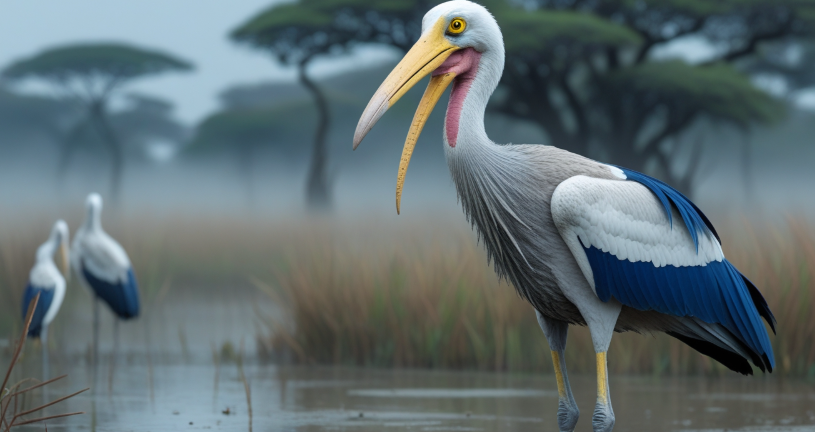
The Shoebill Stork is one of the most extraordinary birds on the planet. Recognized by its gigantic shoe-shaped bill and calm demeanor, this remarkable bird feels like a living dinosaur still walking through the wetlands of Africa. Its unusual appearance, slow movements, and powerful hunting style have captivated wildlife enthusiasts worldwide.
📌 A Bird With Prehistoric Appearance
Standing up to five feet tall, the Shoebill is among the tallest birds in Africa. Its most iconic feature is its oversized bill—broad, thick, and shaped almost like a wooden shoe. While it may look amusing, this bill is a perfectly engineered hunting tool capable of capturing slippery prey such as lungfish, catfish, frogs, and even young crocodiles.
With slate-blue feathers, long legs, and sharp yellow eyes, the Shoebill truly resembles an ancient creature. Scientists believe its ancestors date back millions of years, and unlike many modern birds, it has retained most of its primitive body structure.
🔍 The Secret Behind Its Legendary Stillness
One of the Shoebill’s most famous traits is its ability to remain unbelievably still—sometimes for hours. This stillness is not a sign of laziness but a highly successful hunting strategy known as “freeze and strike.”
- It waits in shallow water.
- It tracks prey such as lungfish that must surface for air.
- When the moment is right, it strikes with extreme speed and precision.
This method makes the Shoebill one of the most efficient hunters among large bird species.
🕊️ A Calm and Gentle Personality
Despite its fierce appearance, the Shoebill is surprisingly gentle and avoids conflict whenever possible. Wildlife photographers often report that the bird may stare intensely but rarely shows aggression. Some Shoebills even greet people with a friendly “bill clatter”—a clicking sound made by snapping their beaks.
However, they are not suitable as pets. They depend on large natural wetlands and specific prey, conditions impossible to replicate in captivity.
🐣 Slow and Delicate Breeding
Shoebills reproduce at a slow rate, usually laying only one or two eggs per season. Both parents build nests on floating vegetation and take turns caring for the young. Because the chicks grow slowly and depend on parents for months, their population grows very gradually.
⚠️ Why the Shoebill Is Considered Vulnerable
While not yet extinct, the Shoebill is officially listed as a vulnerable species. Its primary threats include:
- Destruction of wetlands for agriculture
- Climate change affecting water ecosystems
- Illegal exotic bird trade
- Human settlement expansion
Protecting African wetlands is essential for preserving this magnificent species.
⏳ A Living Window Into the Past
Observing a Shoebill in the wild feels like looking back in time. Its ancient features, calm nature, and unique hunting techniques make it truly one of the most remarkable birds on Earth. While many animals evolved drastically over millions of years, the Shoebill remains a timeless relic of prehistoric wildlife.
📘 Shoebill Stork: Quick Facts
| Feature | Details |
|---|---|
| Scientific Name | Balaeniceps rex |
| Height | 4 to 5 feet |
| Habitat | Wetlands of Uganda, Sudan, Zambia |
| Diet | Lungfish, catfish, frogs, baby crocodiles |
| Lifespan | 35–50 years |
| Special Ability | Freeze-and-strike hunting technique |