Introduction
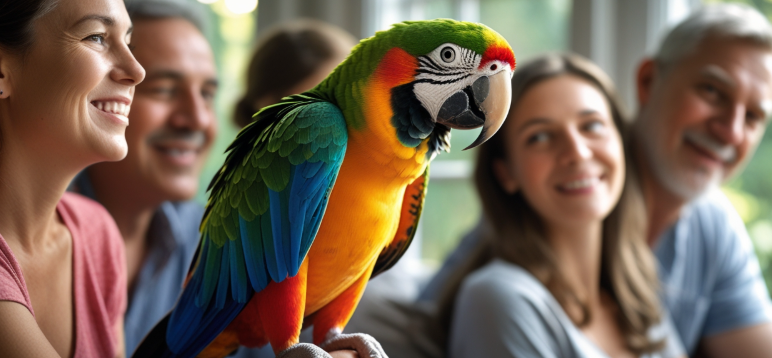
Living with a parrot Learns often feels like living with a tiny, feathered observer who notices everything. From daily routines to familiar voices, parrots quietly take in details that many people don’t realize. Some families are shocked the first time their parrot clearly calls out a name—and gets it right.
This story is about one such moment. In a normal household, without any special training, a pet parrot slowly learned the names of each family member. Not just one name, but several, and used them correctly in everyday situations. What started as casual talking around the bird turned into something surprising and heartwarming. Stories like this remind us how intelligent parrots are and how deeply they connect with the people they live with.
What This Story Is About
This story shows how parrots naturally learn by listening and observing.
By hearing names repeated in daily conversations, the parrot began to associate sounds with specific people and situations.
Life With a Talkative Parrot
The parrot lived in a busy home.
Family members talked often, calling each other by name while cooking, relaxing, or leaving the house.
The bird was always nearby.
The First Name Spoken Clearly
One evening, something unexpected happened.
When one family member entered the room, the parrot clearly said their name out loud.
Everyone froze.
Matching Names With People
Over time, patterns became clear.
The parrot didn’t say names randomly. It used the right name when the right person appeared.
That’s what amazed everyone.
Learning Through Daily Repetition
No formal teaching was involved.
The parrot simply heard names repeated in natural conversation and stored those sounds.
Listening was enough.
Understanding Tone and Timing
The parrot copied more than words.
It copied the tone used when calling someone, making the names sound natural and familiar.
Timing mattered.
Family Reactions and Bonding
The family felt closer to the bird.
Hearing their names spoken created laughter, surprise, and emotional connection.
The parrot became part of conversations.
Is This Normal for Parrots?
Yes, this is possible for many parrots.
Parrots are excellent listeners and are good at linking sounds with meaning, especially in familiar environments.
Not all parrots do this, but many can.
Why Parrots Are So Good at Learning Names
Strong Memory Skills
Parrots remember sounds well.
They can recall words and match them to people over long periods.
Memory supports learning.
Social Nature
Parrots are social animals.
They pay close attention to interactions between people they live with.
Names are part of bonding.
Daily Exposure
Hearing names every day helps.
Repetition without pressure allows learning to happen naturally.
Comfort speeds learning.
What Parrot Owners Can Learn From This Story
Talk naturally around your parrot.
There’s no need to force teaching. Simply involving your bird in daily life encourages learning.
Connection comes first.
Common Myths vs Reality
Myth: Parrots repeat words without understanding
Reality: Many associate words with context.
Myth: Only trained parrots learn names
Reality: Natural exposure works too.
Myth: Parrots talk randomly
Reality: Many speak with purpose.
Myth: Talking parrots are rare
Reality: Many parrots can learn sounds.
Frequently Asked Questions
Can all parrots learn names?
Not all, but many species can.
Does repeating names help parrots learn?
Yes, natural repetition helps.
Will parrots forget names?
They usually remember familiar people.
Conclusion
This story of a parrot learning the names of family members shows just how aware and intelligent these birds can be. By listening closely to daily conversations, the parrot connected sounds to people and used those names meaningfully. There was no training, no pressure—just time, trust, and togetherness.
Parrots don’t just live in our homes; they become part of our routines and relationships. When we talk around them and treat them as companions, they often surprise us in the most delightful ways. This kind of learning is a reminder that communication isn’t always taught—it’s often shared.