The Amazing Reason Hornbill Birds Seal Their Nests

Hornbills are among the most fascinating birds in the world, famous for their long curved beaks and colorful casques. But their most surprising behavior is their unique nesting ritual—when the female hornbill seals herself inside a tree cavity for weeks! Here’s the real science behind why they do this.
Why Hornbills Seal Their Nest Holes
1. Protection From Predators
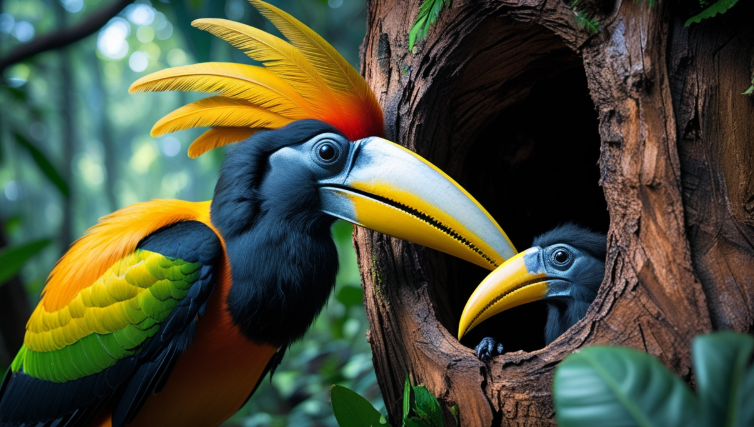
Once the female lays her eggs, she enters a hollow tree and seals the entrance using mud, fruit pulp, and droppings—leaving only a thin slit. This protects the nest from:
- Snakes
- Monitor lizards
- Monkeys
- Other egg predators
Only the male hornbill can feed her through the small opening until the chicks become strong enough.
2. Safe & Stable Temperature for Eggs
The sealed cavity acts like a natural incubator, providing:
- Warmth for proper egg development
- Protection from storms and strong winds
- A dark, quiet space ideal for hatching
This greatly increases chick survival rates.
3. Preventing Parasites
Open nests often attract harmful parasites. By sealing the cavity, hornbills reduce threats like:
- Mites
- Ants
- Bacteria
This helps keep the chicks healthy during their most vulnerable weeks.
4. Protecting the Female During Molting
Many hornbill species shed their flight feathers during nesting. Since they cannot fly at this time, the sealed chamber becomes a safe sanctuary until their feathers regrow.
The Male’s Extraordinary Role
While the female and chicks remain sealed inside, the male hornbill takes on full responsibility:
- He brings fruit, insects, and small animals
- He feeds the family for up to 2–3 months
If the male dies, survival becomes extremely difficult for the mother and chicks. This makes hornbill parenting one of the most intense in the bird world.
When the Seal Breaks
When the chicks grow larger:
- The mother breaks the seal
- Sometimes she reseals it, leaving the chicks inside longer
- The chicks break out when they are fully ready to fly
This gradual process ensures their maximum safety.
Fascinating Hornbill Facts
| Feature | Explanation |
|---|---|
| Beak + Casque | Used for producing sound and amplifying calls |
| Diet | Mainly fruits, but also insects, reptiles, and small mammals |
| Lifespan | 30–50 years, depending on species |
| Habitat | Forests across Asia and Africa |
| Symbolism | Represents purity, protection, and family unity |
Conclusion
Hornbills seal their nest holes as a powerful survival strategy—not by accident. This behavior protects the mother, shields the eggs, prevents predators, and gives chicks the safest start possible. Their dedication makes hornbills one of nature’s most remarkable and devoted parents.