Flowerhorn Cichlid Care Guide — Appearance, Tank Setup & Feeding
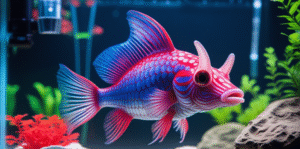
The Flowerhorn is a bold, man-made hybrid cichlid prized for its bright colors and distinctive head hump (the kok). This guide covers origins, personality, tank needs, diet, health tips and quick facts — everything you need to keep a healthy, vibrant Flowerhorn.
Origins & Appearance
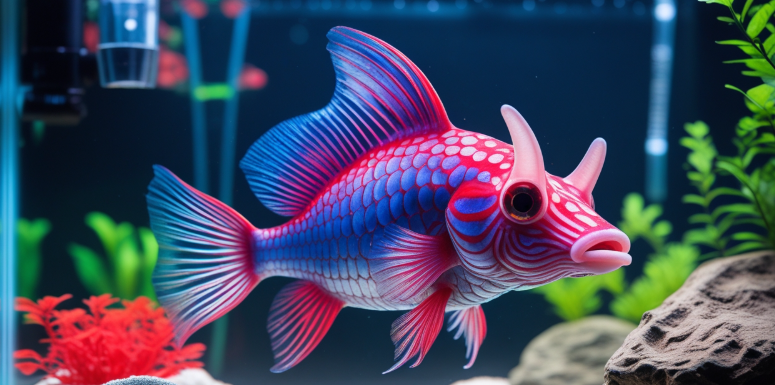
Flowerhorns are hybrid cichlids bred in Southeast Asia (Thailand, Malaysia and nearby areas). They do not exist in the wild — breeders selected different Central American cichlids to create a fish with intense coloration, strong patterns, and the iconic kok (head hump).
Typical features:
- Colors: red, neon blues, golds, metallic hues and pearly scales.
- Patterning: black horizontal markings and pearl-like spots common in many varieties.
- Kok: the fleshy forehead lump — prized culturally and often used as a quality marker.
Personality & Behavior
Flowerhorns behave more like interactive pets than typical aquarium fish. Owners report they recognize people, follow hand movements and display playful, curious behaviors.
- Interactive: may approach glass, respond to feeding gestures.
- Territorial: aggressive toward other fish — usually best kept alone.
- Active: digs substrate and rearranges decor, so sturdy ornaments are recommended.
Tank Requirements & Setup
Flowerhorns need space, strong filtration and steady water conditions. Plan a long-term tank — these fish grow big and are messy eaters.
| Care Topic | Recommended Requirement |
|---|---|
| Minimum Tank Size | 200–250 liters (50+ gallons) for a single adult |
| Temperature | 27–30°C (80–86°F) |
| pH & Hardness | pH 7.4–8.0, medium to hard water |
| Filtration | Powerful canister or sump filter; perform regular water changes |
| Decor | Large, sturdy rocks or ceramic hides (avoid small loose gravel) |
| Tankmates | Generally not recommended — highly territorial & aggressive |
Diet & Health
A high-protein, varied diet supports growth, color and kok development. Quality matters — poor food or overfeeding leads to obesity and health problems.
- Primary foods: Flowerhorn-specific pellets (high protein)
- Treats: frozen bloodworms, shrimp, earthworms (occasional)
- Vegetables: small amounts of blanched peas or greens if desired
- Feeding schedule: 2–3 small meals per day — avoid overfeeding
Behavioral Notes & Owner Tips
- Training-like interaction: some Flowerhorns follow fingers and learn feeding routines.
- Keep stress low: change water slowly, avoid sudden moves near the tank.
- Decoration: secure any ornaments — Flowerhorns will dig and push items around.
- Alone but social: they bond with the owner but usually cannot coexist with community fish.
Why Flowerhorns Are Popular
Their dramatic colors, kok and pet-like personality make Flowerhorns a centerpiece fish in many homes and offices. In several Asian cultures they are considered symbols of luck and prosperity — another reason for their demand.
Quick Facts — Flowerhorn (At a Glance)
| Feature | Detail |
|---|---|
| Scientific Category | Hybrid Cichlid |
| Lifespan | 8–12 years (with good care) |
| Adult Size | 30–40 cm (12–16 inches) depending on variety |
| Nature | Aggressive, territorial |
| Tank Size | Minimum 200 liters (50+ gallons) |
| Diet | High-protein pellets, worms, shrimp |
| Special Feature | Kok (head hump) & bold patterning |