Introduction
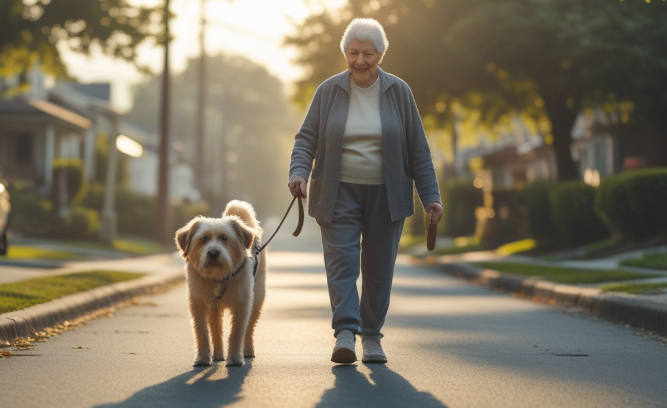
Every morning, as the neighborhood slowly wakes up, a heartwarming scene unfolds on a quiet street. An elderly neighbor steps outside with the help of a walking stick, and right beside them is a loyal dog, tail gently wagging, ready for their Dog Walks daily. Rain or shine, hot or cold, the pair can be seen moving at a slow, steady pace, sharing a routine that has become special to everyone who notices.
Stories like this remind us that companionship doesn’t always come from people alone. Animals, especially dogs, have an incredible ability to sense emotions, offer comfort, and create meaningful bonds. This simple daily walk has become more than exercise—it’s a source of joy, safety, and connection.
What This Story Is About
This story highlights a quiet but powerful bond.
A dog chooses to walk every day with an elderly neighbor, offering companionship, routine, and emotional support through simple presence.
How the Bond Began
A Chance Friendship
It started casually.
The dog first followed the neighbor during short walks, staying close without being called.
Soon, it became routine.
Trust Built Over Time
Consistency created comfort.
The elderly neighbor grew to rely on the dog’s calm presence.
The dog learned the walking pace.
A Mutual Understanding
No words were needed.
The dog naturally matched the neighbor’s slow steps, stopping whenever they rested.
Why Dogs Form Bonds With Elderly People
Strong Sense of Empathy
Dogs feel emotions.
They can sense loneliness, weakness, or sadness and respond with closeness.
Love for Routine
Dogs enjoy schedules.
Daily walks create structure that dogs naturally follow.
Protective Instinct
Dogs often guard gently.
Staying close helps them feel they are protecting their companion.
The Impact on the Elderly Neighbor
Emotional Comfort
Loneliness fades.
Having a dog nearby makes walks feel safer and happier.
Improved Health
Regular walking helps.
Even short daily walks support physical and mental health.
Sense of Purpose
Responsibility motivates.
Knowing the dog is waiting encourages consistency.
How the Community Reacted
Neighbors noticed quickly.
Smiles followed the pair wherever they went.
Some offered treats.
Others simply waved, touched by the silent friendship.
The dog became a local symbol of kindness.
What We Can Learn From This Story
Small actions matter.
You don’t need grand gestures to change someone’s day.
Consistency creates trust.
Animals often give companionship without expectations.
Kindness can be silent.
Frequently Asked Questions
Was the dog owned by the elderly neighbor?
In many such stories, the dog may belong to the neighborhood or another family.
Is it safe for dogs to walk with elderly people?
Yes, especially calm and gentle dogs that naturally match pace.
Why do dogs choose certain people?
Dogs respond to emotions, energy, and routine.
Conclusion
The story of a dog walking daily with an elderly neighbor is a beautiful reminder of how powerful simple companionship can be. Without words or promises, the dog offers loyalty, comfort, and a reason to step outside each day. In return, the elderly neighbor offers affection, routine, and trust.
In a world that often moves too fast, this quiet daily walk shows that kindness doesn’t need attention—it only needs presence.