
Cockatiel Complete Care Guide – Behavior, Diet, Training & Housing
Cockatiels are among the most popular pet birds due to their gentle personality, expressive crest feathers, and affectionate nature. Known for their whistles, curiosity, and strong bond with humans, they make wonderful indoor pets for both beginners and experienced bird lovers.
Though smaller than parrots, Cockatiels share their intelligence and charm — but are much easier to care for. This detailed guide covers their temperament, cage setup, diet, behavior signals, and training tips to help your bird thrive.
Origin & Natural Habitat
Cockatiels originate from Australia, living mostly in open areas such as grasslands, dry forests, and river regions. They travel in flocks, constantly searching for food and water — which explains their energetic nature in captivity.
- They love climbing and exploring.
- Whistling is their primary form of communication.
- They mimic flock behavior with their human families.
Appearance & Unique Features
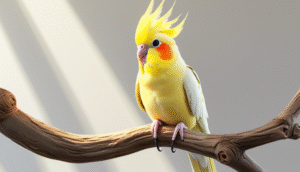
Cockatiels have an extremely expressive appearance. Their crest feathers move according to mood.
- Soft grey or yellowish body
- Bright orange cheek patches
- Long elegant tail
- Lightweight build
- Upright yellow crest
Color variations include: Lutino, Pied, White-faced, Albino, Pearl, Cinnamon & more.
Temperament & Personality
Cockatiels are gentle, affectionate, and social. They enjoy human interaction and rarely bite unless frightened.
- Curious and playful
- Soft whistling (especially males)
- Strong bonding — follow owners around
- Calm and child-friendly
- Enjoy shoulder time and gentle preening
Behavior Signals & What They Mean
Their crest and body language indicate how they feel.
| Behavior | Meaning |
|---|---|
| Crest standing tall | Excited, alert, curious |
| Crest slightly back | Relaxed, comfortable |
| Crest flat | Scared or stressed |
| Gentle chirps | Happy or seeking attention |
| Hissing | Warning — wants space |
| Beak grinding | Feeling safe and sleepy |
Training & Interaction
Cockatiels learn quickly with consistent, gentle training.
- Begin by offering treats like millet.
- Teach simple whistles (males excel at this).
- Keep training short — 3 to 5 minutes.
- Use positive reinforcement only.
- Teach basic tricks like step-up, spin, and target training.
Ideal Cage Setup
Even though cockatiels are small, they need space to move.
- Minimum cage size: 60 cm × 45 cm × 60 cm
- Multiple perches of different thickness
- Chew toys, climbing toys, and foraging items
- Cuttlebone for calcium
- Clean food & water bowls
Daily out-of-cage time is essential for exercise.
Diet & Feeding Routine
A balanced diet keeps your cockatiel healthy and active.
- Pellets (60%) — main nutrition source
- Seeds (20%) — give sparingly
- Vegetables (15%) — spinach, carrots, broccoli
- Fruits (5%) — apples, berries, melon
Avoid: chocolate, avocado, onion, caffeine.
Common Health Issues
Cockatiels are hardy but can develop certain conditions:
- Respiratory infections
- Feather plucking
- Overgrown nails or beak
- Mite infections
- Vitamin A deficiency
Clean housing and regular vet checkups prevent most issues.
Quick Fact Table
| Feature | Details |
|---|---|
| Category | Bird |
| Species | Cockatiel (Nymphicus hollandicus) |
| Lifespan | 15–25 years |
| Temperament | Friendly, playful, gentle |
| Noise Level | Medium – whistles more than screeches |
| Best For | Families, beginners, apartments |
FAQs
1. Can cockatiels talk?
They can learn a few words but are better at whistling tunes.
2. Do they need a companion?
A single cockatiel does fine with regular human attention.
3. How often should I clean the cage?
Light cleaning daily, and deep cleaning once a week.