Introduction
When a new baby arrives home, the entire house changes. Sleep becomes lighter, routines disappear, and everyone moves more quietly than before. Many parents worry not just about themselves, but also about how their pets will react. Will the cat feel ignored? Will it stay away? Or will it cause problems?
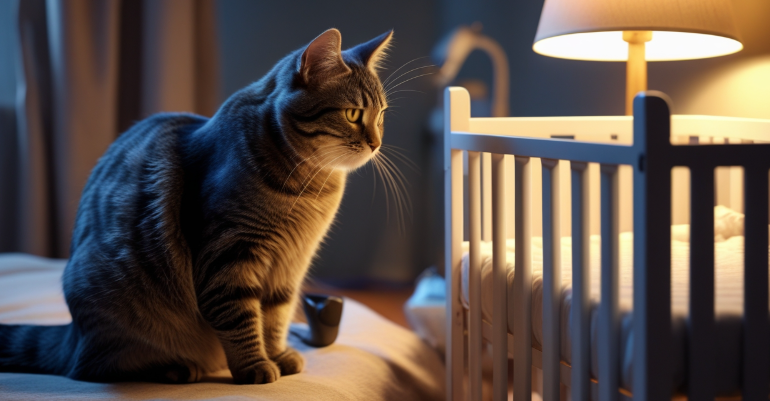
In some homes, something unexpected happens instead. Each night, as the house grows quiet and the baby sleeps, the family cat quietly settles nearby. It doesn’t make noise. It doesn’t demand attention. It simply stays close, watching, listening, and leaving only when morning comes.
Stories like this often surprise people who believe cats are distant or uninterested in family life. Yet many parents around the world have witnessed the same gentle behavior. A cat that seems to understand something important has changed—and chooses to be present every single night.
What This Story Is About
This story is about instinct, awareness, and quiet care.
Cats may not show love the way dogs do, but they are highly observant animals. When a newborn enters their space, some cats respond by becoming calm watchers.
Their nightly presence is not random. It reflects attention, routine, and a natural response to something small and vulnerable.
How the Cat’s Behavior Began
Noticing the New Arrival
Cats notice change immediately.
New smells, new sounds, and new routines alert them that something important has happened. A newborn brings all three.
Many cats approach carefully, watching from a distance before deciding where they belong.
Choosing a Nighttime Routine
Night is when cats are most alert.
While humans sleep deeply, cats remain aware. Some choose to stay near the baby’s crib, bed, or room during these quiet hours.
This becomes part of their nightly habit.
Staying Calm and Still
The cat doesn’t interfere.
Instead of touching or waking the baby, the cat stays still, often sitting or lying nearby. This calm presence continues night after night.
It’s watchful, not intrusive.
Why Cats Act Protective Around Babies
Strong Awareness of Vulnerability
Cats are sensitive to size and sound.
A newborn’s soft movements and quiet cries signal vulnerability. Cats often respond by staying alert rather than playful.
Their behavior shifts naturally.
Attachment to the Family Unit
Cats bond with households, not just individuals.
When a baby becomes part of the home, the cat includes them too. Staying nearby feels like maintaining balance in their territory.
Protection becomes part of routine.
Comfort With Familiar Sounds
Over time, babies’ breathing and movements become familiar.
Cats adjust and remain nearby without stress. The baby becomes part of the cat’s known world.
Familiarity brings calm.
Instinct to Guard Quiet Spaces
Cats often guard sleeping areas.
They prefer peaceful spaces and may sit near beds or rooms they feel responsible for. A baby’s sleeping area becomes one of those places.
It’s instinctive, not planned.
Is This Normal or Something Unusual?
Yes, this behavior can be normal.
While not every cat does this, many show gentle interest in babies. Staying nearby at night does not mean the cat understands parenting—it means the cat recognizes something worth watching.
As long as the cat remains calm and respectful, this behavior is generally safe and positive.
What Parents and Pet Owners Can Learn
Observation matters.
If a cat chooses to stay near a baby without showing stress, it’s often best to allow it under supervision. The cat is expressing comfort, not dominance.
Parents can support this by maintaining routines, giving the cat attention, and keeping shared spaces calm.
Trust grows when animals feel included.
Common Myths vs Reality
Myth: Cats are jealous of newborns
Reality: Many cats adjust calmly and become attentive.
Myth: Cats should be kept far away from babies
Reality: Calm, supervised interaction is often fine.
Myth: Cats don’t care about human babies
Reality: Some cats show strong awareness and care.
Myth: Protective behavior means aggression
Reality: Quiet watching is not aggression.
Frequently Asked Questions
Why does the cat only stay near the baby at night?
Cats are more alert at night and prefer quiet hours.
Should parents stop the cat from doing this?
Only if the cat shows stress or unsafe behavior.
Do all cats behave this way around babies?
No, each cat responds differently.
Conclusion
A cat protecting a newborn every night is a gentle reminder that care doesn’t always look loud or obvious. Sometimes, it’s quiet presence, steady awareness, and choosing to stay close when the world sleeps. This behavior reflects instinct, familiarity, and a subtle bond forming within the family.
For parents, it can be comforting to see a trusted pet calmly sharing space with their child. For the cat, it’s simply responding to change in the only way it knows—by watching over something small, new, and important. In those quiet nighttime hours, a silent guardian takes its place, asking for nothing in return.