Introduction
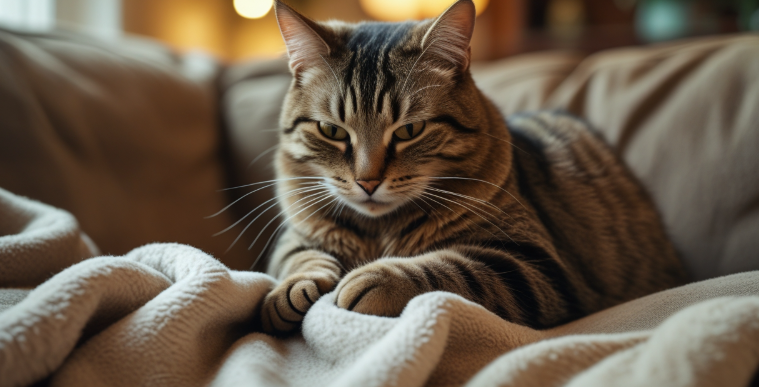
You’re relaxing on the couch when your cat hops up, circles a soft blanket, and starts pressing their paws in and out like they’re kneading dough. Sometimes they purr loudly, half-close their eyes, or even drool a little. For many cat owners, this behavior is both adorable and puzzling.
Why do cats do this, especially on blankets, pillows, or even your lap? It can look strange, but kneading is one of the most common and meaningful cat behaviors. Almost every cat does it at some point in their life, whether they’re a tiny kitten or a full-grown adult.
Kneading isn’t random or silly. It comes from deep instinct and emotion. When cats knead soft blankets, they’re expressing comfort, memory, and trust. Understanding this behavior helps owners see just how safe and content their cats feel in those quiet moments.
What This Behavior Is About
Kneading is an instinctive behavior.
It begins very early in a cat’s life and often stays with them forever. When cats knead, they’re usually relaxed and emotionally comfortable.
Soft blankets simply bring out this instinct more strongly.
Main Reasons Cats Knead Soft Blankets
Kitten Comfort Memories
Kneading starts in kittenhood.
Kittens knead their mother’s belly while nursing to help milk flow. This motion becomes linked with warmth, safety, and comfort.
As adults, cats repeat this motion when they feel those same emotions.
Feeling Safe and Relaxed
Cats knead when they feel secure.
A soft blanket feels warm and gentle under their paws, much like their early sleeping spots. Kneading is a sign that your cat feels calm and protected.
It’s often paired with purring and slow blinking.
Marking Territory With Scent
Cats have scent glands in their paws.
When they knead, they leave behind a scent that humans can’t smell. This marks the blanket as familiar and comforting.
It’s their way of saying, “This is mine, and it feels good.”
Preparing a Resting Spot
In the wild, cats knead grass or soft ground.
This helps flatten the surface and make it more comfortable for resting. Even though blankets are already soft, the instinct remains.
Kneading is like making a bed feel “just right.”
Emotional Attachment to Owners
When cats knead on your lap or your blanket, it’s personal.
They associate your scent with safety and care. Kneading becomes a way of bonding and showing affection.
It’s a quiet sign of trust.
Is This Normal or Something to Worry About?
Yes, kneading is completely normal.
It’s one of the healthiest signs of a relaxed and happy cat. Most cats knead more when they’re comfortable in their environment.
Only if kneading becomes aggressive or stressful would it need attention, which is rare.
What Cat Owners Can Learn or Do
The best response is to let your cat enjoy it.
If claws are uncomfortable, placing a thicker blanket between you and your cat can help. Trimming nails regularly also reduces discomfort.
Never punish kneading. It’s a positive behavior linked to trust and comfort.
Common Myths vs Reality
Myth: Cats knead because they’re anxious
Reality: It usually means they feel safe.
Myth: Only kittens knead
Reality: Adult cats knead too.
Myth: Kneading is bad behavior
Reality: It’s natural and comforting.
Myth: Cats knead to annoy owners
Reality: They’re expressing affection.
Frequently Asked Questions
Why does my cat knead and purr at the same time?
Both actions signal comfort and contentment.
Why does my cat drool while kneading?
Some cats relax so deeply that drooling happens.
Should I stop my cat from kneading?
No, it’s best to allow it.
Conclusion
Cats knead soft blankets because it reminds them of comfort, warmth, and safety. This gentle motion connects them to early memories and helps them relax in the present moment. When your cat kneads, they’re showing trust and emotional comfort—not trying to cause trouble.
For cat owners, kneading is a quiet compliment. It means your cat feels at home and at peace. By allowing this behavior and providing soft spaces, you’re giving your cat something deeply familiar and reassuring. Sometimes, those rhythmic paw presses are just your cat’s way of saying, “I feel safe here.”