Introduction
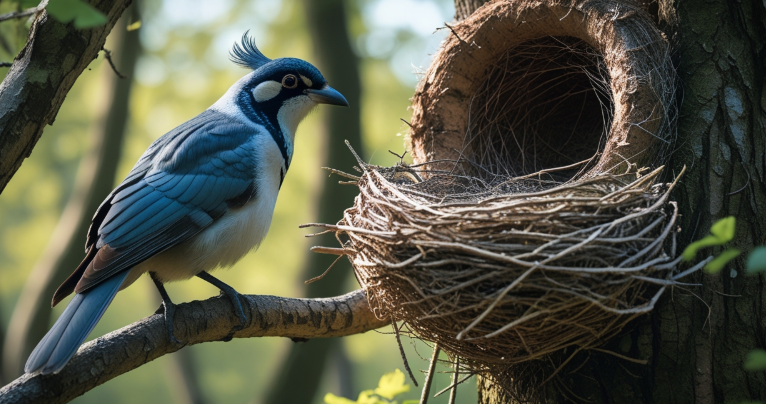
Imagine carefully building a nest, keeping eggs warm, and protecting them day and night—only to end up raising a chick that isn’t yours. This is something many small birds experience without realizing it. Somewhere along the way, a cuckoo bird quietly placed its egg in their nest and flew away.
To humans, this behavior can seem strange or even unfair. Why wouldn’t a bird take care of its own eggs? Why leave such an important job to another species? Yet for cuckoo birds, this method has been part of survival for generations.
This isn’t laziness or cruelty. It’s a natural strategy shaped over time. Understanding why cuckoo birds lay eggs in other birds’ nests helps us see how different survival methods exist in nature, even when they look unusual from the outside.
What This Behavior Is About
This behavior is known as nest sharing by strategy, not accident.
Cuckoo birds rely on other birds to raise their young. They place their eggs in carefully chosen nests so the host bird does the hard work.
It’s a survival method, not a mistake.
Main Reasons Cuckoo Birds Lay Eggs in Other Nests
Avoiding Nest Building
Building a nest takes time and energy.
By skipping this step, cuckoo birds can focus on finding safe places for their eggs. This reduces risk and effort.
It allows them to reproduce without staying in one spot.
Increasing Survival Chances
Spreading eggs across different nests lowers risk.
If one nest fails, others may succeed. This increases the chances that at least some chicks survive.
It’s a way of not putting everything in one place.
Matching Eggs to Fool Host Birds
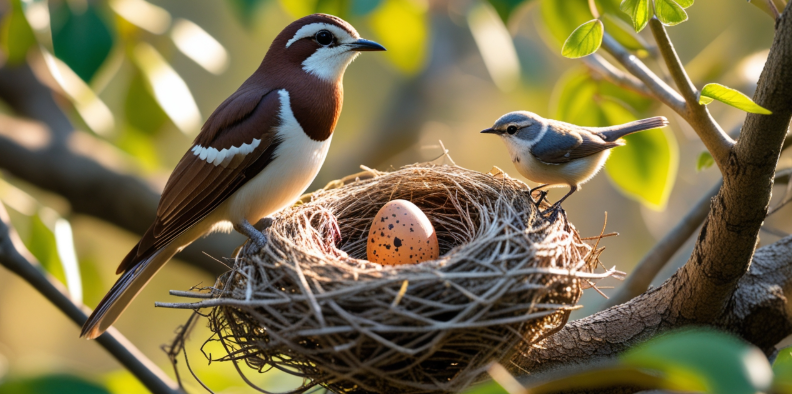
Cuckoo eggs often resemble the host bird’s eggs.
Color and size are similar, making it hard for the host bird to notice the difference. This reduces the chance of rejection.
It’s a quiet and effective trick.
Letting Other Birds Do the Feeding
Once the egg hatches, the host bird feeds the chick.
Cuckoo chicks often grow faster and louder, getting more attention. The host bird responds by feeding it more.
The cuckoo parent doesn’t need to return.
Freedom to Lay More Eggs
Because cuckoos don’t raise their young, they can lay more eggs.
This increases their chances of passing on their genes. Less time spent caring means more time reproducing.
It’s efficient from a survival point of view.
Is This Normal or Something to Worry About?
Yes, this is completely normal for cuckoo birds.
They have evolved this behavior naturally. While it may seem harsh, it’s part of how ecosystems work.
Host birds are not being targeted personally—it’s instinct, not intention.
What We Can Learn From This Behavior
Nature doesn’t follow human rules of fairness.
Cuckoo birds show that survival can take many forms. Some species invest heavily in parenting, while others rely on strategy and timing.
Both approaches exist naturally and serve a purpose.
Common Myths vs Reality
Myth: Cuckoo birds are lazy parents
Reality: Their strategy is intentional and instinctive.
Myth: Host birds always realize the trick
Reality: Many cannot tell the difference.
Myth: Cuckoo chicks are aggressive by choice
Reality: Their behavior is driven by instinct.
Myth: This behavior is rare
Reality: It’s common among cuckoo species.
Frequently Asked Questions
Do all cuckoo birds do this?
Not all, but many species use this method.
Why don’t host birds abandon the nest?
They often don’t recognize the foreign egg.
Do cuckoo parents ever return?
Usually, they do not.
Conclusion
Cuckoo birds lay eggs in other birds’ nests as a survival strategy developed over time. By letting other birds raise their chicks, cuckoos reduce risk and increase their chances of success.
While this behavior may seem strange or unfair to us, it’s completely natural in the animal world. Nature values survival, not sentiment. The cuckoo’s approach reminds us that different species adapt in different ways, and every behavior has a reason rooted in instinct and evolution.