Introduction
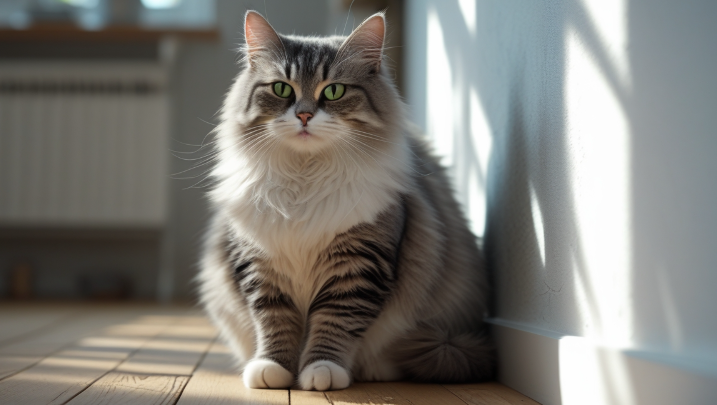
If you live with a cat, you’ve probably seen this strange moment. Your cat suddenly freezes, sits still, and stares intensely at a blank wall. No bug, no sound, no movement—at least nothing you can see. You might wave your hand or call their name, but they stay focused, as if something invisible has caught their attention.
For many cat owners, this behavior can feel confusing or even a little creepy. It’s easy to wonder if something is wrong or if cats really can see things we can’t. While it looks mysterious, wall-staring is actually a very common cat behavior.
In most cases, there’s a simple explanation rooted in a cat’s sharp senses and natural instincts. Understanding why cats stare at walls can help you feel more at ease and better understand how your cat experiences the world around them.
What This Behavior Is About
Cats experience their surroundings very differently from humans. Their senses are tuned to notice tiny movements, faint sounds, and subtle changes in light or smell.
When a cat stares at a wall, it’s rarely “nothing” to them. There is usually some kind of stimulus that humans can’t easily detect. This behavior is part of how cats observe, process, and react to their environment.
Most of the time, wall-staring is simply your cat being a cat.
Main Reasons Cats Stare at Walls
Hearing Sounds Humans Can’t Hear
Cats have extremely sensitive hearing. They can pick up sounds inside walls that humans never notice.
Tiny noises like insects moving, water pipes shifting, or even electrical buzzing can grab a cat’s attention. The wall becomes the source of the sound, so that’s where your cat focuses.
To your cat, that wall is full of information.
Seeing Tiny Movements or Shadows
Cats are excellent at detecting movement, even very small ones. A flicker of light, a moving shadow, or dust floating through the air can trigger intense focus.
Light reflecting from a phone, car headlights passing outside, or sunlight shifting through a window can all create visual changes on walls.
Your cat isn’t staring at nothing—they’re watching something subtle happen.
Smelling Something Unfamiliar
Cats rely heavily on their sense of smell. Walls can carry scents from insects, other animals, or even changes in the home.
If something new has passed through the area, your cat may pause and investigate by staring and sniffing. This helps them understand changes in their territory.
Smell-based curiosity often looks strange to humans but makes perfect sense to cats.
Natural Hunting Instincts
Even well-fed house cats still have strong hunting instincts. When their brain detects a possible target, they lock in.
Staring is part of the hunting sequence. Cats focus, stay still, and observe before making any move—even if they never actually pounce.
A wall might hide a bug or sound, triggering this instinctive response.
Curiosity and Boredom
Sometimes, cats stare at walls simply because they’re curious or bored. When there’s not much happening, even small details become interesting.
Cats often create their own entertainment by observing their surroundings closely. A quiet room can turn into a mental playground.
This is more common in indoor cats with limited stimulation.
Processing Their Environment
Cats don’t rush to react the way humans do. They often pause and observe before deciding what to do.
Staring at a wall may be your cat gathering information and deciding whether something matters or not.
Once they’ve decided it’s harmless, they usually move on.
Is This Normal or Something to Worry About?
In most cases, staring at walls is completely normal. It’s part of a cat’s sensory awareness and curiosity.
You generally don’t need to worry if your cat is otherwise active, eating normally, and interacting with you as usual.
Concern may arise only if the behavior becomes constant, paired with confusion, or happens alongside other unusual changes. Occasional wall-staring on its own is not a problem.
What Cat Owners Can Learn or Do
When your cat stares at a wall, observe calmly instead of interrupting. Let them finish processing whatever caught their attention.
You can also make sure your cat has enough stimulation. Toys, window views, climbing spaces, and regular playtime help reduce boredom-related behaviors.
Keeping your home clean and free of pests can also reduce sounds or smells that trigger intense focus.
Most importantly, trust that your cat’s senses are doing their job.
Common Myths vs Reality
Myth: Cats see ghosts or spirits
Reality: Cats are reacting to sounds, movement, or smells humans can’t detect.
Myth: Wall-staring means a cat is unwell
Reality: Occasional staring is normal and common.
Myth: Cats are daydreaming
Reality: They are usually actively sensing their environment.
Myth: Only older cats do this
Reality: Cats of all ages can stare at walls.
Frequently Asked Questions
Why does my cat stare at the same wall often?
That area may have recurring sounds, smells, or light changes your cat notices.
Should I distract my cat when this happens?
It’s usually fine to let them observe unless they seem stressed.
Do indoor cats do this more than outdoor cats?
Yes, indoor cats may focus more on small indoor stimuli due to limited variety.
Conclusion
Cats stare at walls not because they’re seeing nothing, but because they’re noticing something humans can’t. Their sharp hearing, sensitive vision, and strong instincts allow them to detect tiny changes in their environment that go unnoticed by us.
In most cases, this behavior is completely normal and even healthy. It shows that your cat is alert, curious, and engaged with their surroundings. The next time your cat fixes their gaze on a blank wall, remember—they’re not being strange. They’re simply using their incredible senses to understand the world in their own quiet, focused way.