
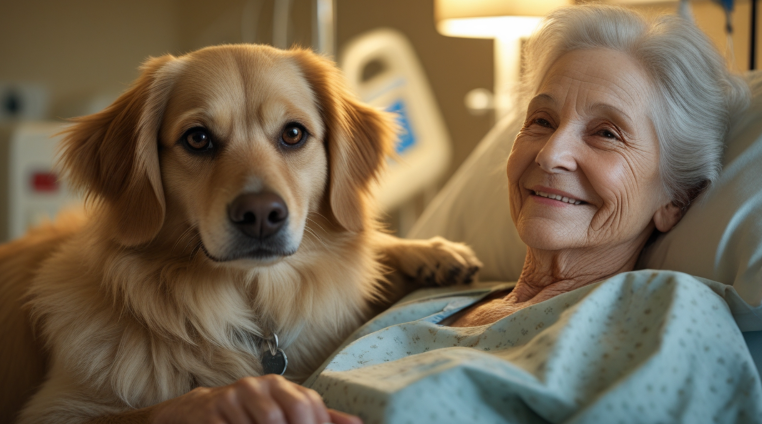
Therapy Dog Brings Comfort to Hospital Patients

Hospitals can be stressful, lonely, and overwhelming. Enter the therapy dog—a gentle, empathetic companion who brings comfort, smiles, and calmness to patients. One remarkable dog became famous for visiting hospitals daily, providing emotional support and lightening the burdens of patients in ways medicine alone cannot.
2. How Therapy Dogs Help Patients
Therapy dogs are specially trained to interact safely and empathetically. Their presence has been shown to:
- Reduce anxiety and stress
- Lower blood pressure and heart rate
- Encourage social interaction
- Boost mood and mental well-being
Unlike service dogs, therapy dogs offer emotional support without performing specific tasks, making them accessible and heartwarming for all patients.
3. Table: Therapy Dog Benefits in Hospitals
| Benefit | How It Helps | Example |
|---|---|---|
| Emotional support | Reduces loneliness | Patients smile and interact more |
| Physical relaxation | Lowers blood pressure | Gentle petting releases calming hormones |
| Motivation | Encourages movement | Patients walk or stretch to meet the dog |
| Social interaction | Improves morale | Patients share stories or laughter with staff nearby |
4. The Dog’s Journey to Hospital Heroism
- Basic obedience and socialization training
- Learning to remain calm around medical equipment
- Responding gently to patients of all ages
- Practicing friendly greetings
- Receiving regular health checks
Through consistent training and temperament testing, the dog became a trusted companion for patients and staff alike.
5. Real-Life Hospital Stories
Patients often recount how the dog brightened long hospital stays:
- A child recovering from surgery perked up when the dog wagged its tail
- Elderly patients with limited mobility found comfort in gentle nuzzling
- Families reported reduced stress and shared laughter during difficult times
Therapy dogs provide more than companionship—they provide emotional healing.
6. How Therapy Dogs Are Trained
- Basic obedience: sit, stay, come
- Desensitization to medical sounds and equipment
- Social skills for children, adults, and elderly patients
- Calm behavior in crowded or noisy environments
Properly trained therapy dogs ensure safety and comfort for everyone in the hospital.
7. Why Dogs Are Effective Emotional Healers
- Read facial expressions and tone of voice
- Respond to stress signals with calming behavior
- Offer unconditional affection
- Act as non-judgmental companions
Dogs’ innate sensitivity makes them ideal partners in emotional care settings.
8. Conclusion: Four Legs, One Heart
This story highlights the extraordinary emotional intelligence and empathy of dogs. Through training, dedication, and natural instincts, this therapy dog transforms sterile hospital corridors into spaces of comfort, laughter, and hope. Sometimes, the gentle nuzzle of a dog can be as powerful as any medical treatment.



Hit’n’Spin Login… Sounds fun, right? Well, it is! Got in a few rounds and the interface is pretty smooth. Give it a spin yourself and see what you think! Best of luck! Find it here: hitnspinlogin