The Majestic Quetzal: A Bird of Beauty, Spirit & Legend
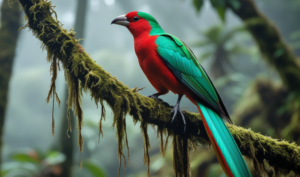
Among the world’s most enchanting birds, the Quetzal shines with unmatched beauty and deep cultural meaning. Found mainly in the cloud forests of Central America, this extraordinary bird was honored by ancient civilizations like the Maya and Aztec, who saw it as a symbol of freedom, life, and the divine.
With its glowing feathers and mystical presence, the Quetzal remains one of the most legendary species in the Americas.
2. The Quetzal’s Mesmerizing Appearance
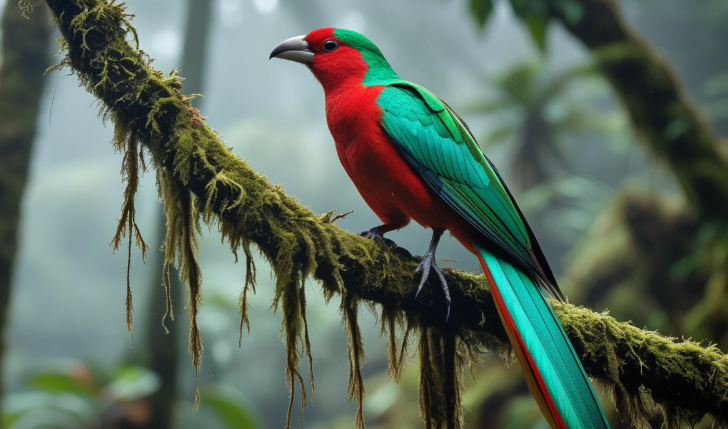
The Resplendent Quetzal is admired for its brilliant emerald-green body and vibrant red chest. Male Quetzals are especially breathtaking with tail feathers that can grow up to three feet long.
Key Visual Features
- Metallic green plumage that reflects sunlight
- Crimson chest that glows during flight
- Golden-green crest resembling a helmet
- Long trailing tail feathers in males
- Soft feathers adapted to humid climates
The bird’s shimmering look comes from microscopic feather structures rather than pigments, creating a magical iridescence.
3. Cultural and Spiritual Significance
The Quetzal is more than a bird—it is a sacred icon in ancient Mesoamerican culture.
Symbolism in History
- A symbol of freedom (the bird rarely survived in captivity)
- Believed to be a messenger of the gods
- Status symbol for priests and royalty
- Featured in art, legends, and currency
- The national bird of Guatemala
The name “quetzal” itself means precious or sacred in the Nahuatl language.
4. Habitat: Life in the Cloud Forests
The Quetzal lives in cool, misty cloud forests filled with orchids, mosses, and towering trees.
Where They Are Found
- Guatemala
- Costa Rica
- Honduras
- Nicaragua
- Southern Mexico
These forests offer ideal food sources, nesting cavities, and protective cover.
5. Diet: A Fruit-Loving Hunter
Quetzals enjoy a varied diet but prefer the wild avocado, which they swallow whole and later regurgitate—helping replant the forest.
| Food Type | Examples | Importance |
|---|---|---|
| Fruits | Wild avocado, berries | Main energy source |
| Insects | Ants, beetles | Provides protein |
| Small Animals | Frogs, lizards | Occasional food |
| Seeds | Various rainforest plants | Helps plant dispersal |
6. Mating and Nesting Behavior
Males perform elegant displays with their long feathers to attract females. Nesting takes place inside hollow trees or rotting trunks.
Nesting Highlights
- Nest inside natural cavities
- Both parents incubate the eggs
- Typically lay 2 pale blue eggs
- Chicks stay until strong enough to fly
7. Why Quetzals Are Hard to Spot
Despite their bright colors, Quetzals blend perfectly into the forest environment.
Why They’re Hard to See
- Colors match filtered forest light
- Prefer quiet, high branches
- Move slowly and silently
- Misty cloud forests add natural camouflage
8. Threats and Conservation Efforts
The Quetzal faces modern challenges that threaten its survival.
Major Threats
- Loss of cloud forest habitat
- Climate change
- Illegal trapping
- Decline in fruit-bearing trees
Conservationists work to protect forests, create reserves, and support sustainable ecosystems.
9. Conclusion: A Timeless Bird of Wonder
The Quetzal is not only breathtaking but also a living symbol of history and spiritual meaning. Its iridescent feathers, gentle behavior, and sacred place in ancient culture make it one of Central America’s greatest treasures.
Protecting the Quetzal means preserving beauty, tradition, and the magic of the cloud forests for generations to come.