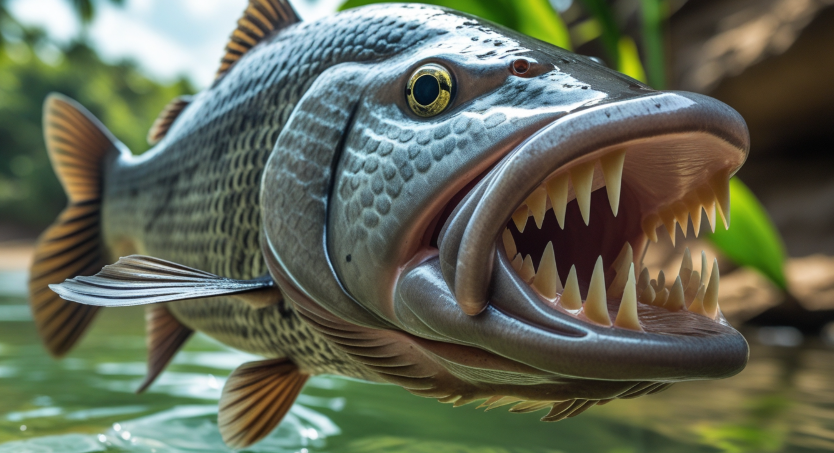

Why Catfish Have Whiskers: The Powerful Purpose Behind Their Barbels

Catfish are among the most recognizable freshwater fish, mainly because of their long whisker-like structures called barbels. These whiskers may look unusual, but they are one of the most advanced sensory tools in the aquatic world. They help catfish survive where other fish can’t.
1. What Catfish Whiskers Really Are
Despite looking like a cat’s whiskers, catfish barbels are very different. They are soft, flexible organs loaded with thousands of sensory cells. These whiskers act like an underwater radar system, helping the fish detect:
- Movements
- Vibrations
- Chemical signals
- Hidden prey
These abilities allow catfish to “see” even in dark, muddy waters.
2. Catfish Thrive Where Sight Doesn’t Work
Catfish prefer environments where visibility is extremely low:
- Muddy rivers
- Dark lakes
- Deep ponds
- Bottom layers of water bodies
Since light barely reaches these places, eyesight is almost useless. Their whiskers help them hunt and navigate without relying on vision.
3. Whiskers Let Catfish “Taste” the Water
Catfish whiskers are full of taste buds. They can taste and identify things simply by brushing their barbels against the environment. They can detect:
- Worms
- Insects
- Small fish
- Plants
- Organic matter
Catfish can even sense a single drop of food odor in millions of drops of water.
4. Whiskers Work Like Touch Sensors
Catfish barbels function like touch-sensitive antennas. When their whiskers touch rocks, plants, or mud, they instantly gain information about texture, shape, and movement.
This helps them:
- Avoid obstacles
- Find hiding spots
- Explore feeding grounds
- Sense predators and prey
5. Perfect Tools for Night Hunting
Since catfish are active at night, their whiskers help them become highly effective nocturnal hunters. Barbels allow them to:
- Locate prey in complete darkness
- Follow scent trails
- Detect hidden movement
- Hunt without alerting prey
6. Finding Food Buried Underground
Many creatures hide under mud or sand. Catfish whiskers can detect buried vibrations or chemical signals, giving them a major advantage when finding:
- Clams
- Crustaceans
- Buried insects
- Decomposing plants or animals
7. Different Catfish Have Different Whiskers
Not all catfish share the same style of whiskers. Barbels differ in:
- Length
- Number
- Sensitivity
- Position
| Catfish Type | Whisker Feature |
|---|---|
| Channel Catfish | Four pairs of long, sensitive barbels |
| Mekong Giant Catfish | Shorter whiskers due to clearer water habitats |
| Electric Catfish | Uses barbels along with electric fields for hunting |
8. Millions of Years of Evolution
Catfish have existed for over 60 million years. Their whiskers are one of the main reasons they’ve survived so long. These sensory tools help them thrive in extreme environments where other fish cannot compete.
Conclusion
Catfish whiskers are more than just a unique appearance—they are one of nature’s most sophisticated detection systems. Barbels help catfish taste, touch, sense movement, navigate in darkness, and find hidden prey with remarkable accuracy.
Without whiskers, catfish would not be able to survive in the challenging environments they call home.