
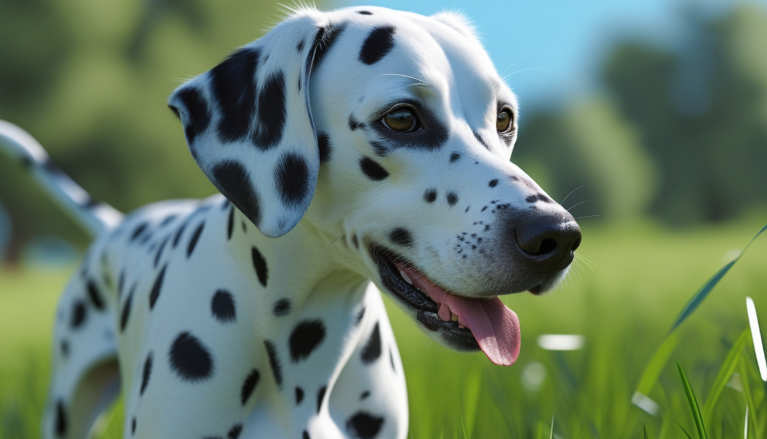
How Dalmatian Puppies Develop Their Iconic Spots
Introduction
Dalmatians are instantly recognized for their bold black or brown spots, yet few people know that these dogs begin life without any markings at all. Their coat transformation—from pure white puppies to beautifully spotted adults—is one of the most remarkable changes in the canine world. This development is guided by genetics, growth stages, and natural pigmentation processes.
Born Pure White: The Puppy Stage
Dalmatian puppies arrive in the world with completely white coats. At birth, the pigment-producing cells responsible for spots are still inactive.
During the first 10–14 days:
- Faint shadows begin forming beneath the skin
- Early pigment clusters start to appear
- The first small spots emerge on the coat
Each puppy develops its own unique pattern, making every Dalmatian truly one-of-a-kind.
The Genetics Behind Dalmatian Spots
Dalmatian spotting is mainly controlled by a gene commonly known as the ticking gene. This gene guides melanocytes (pigment cells) to place color in specific hair follicles as the puppy grows.
Important genetic highlights:
- Spots grow from inside the hair follicles, not on top of the coat
- No two Dalmatians share the exact same pattern
- The placement, size, and number of spots are entirely random
Because of these genetic traits, every Dalmatian has a pattern as unique as a fingerprint.
How the Spots Develop Over Time
Spot formation continues steadily as the puppy matures. Here’s how the transformation typically unfolds:
- 2–4 weeks: First dots become visible
- 3 months: Most of the main pattern has formed
- 1 year: The complete adult pattern is developed
Spots may darken with age, and occasional tiny new spots can continue appearing throughout the first year.
Different Types of Dalmatian Spots
Although black spots are the most familiar, Dalmatians can have several striking color variations:
| Spot Type | Description |
|---|---|
| Black | The classic and most widespread pattern |
| Liver (Brown) | Caused by a recessive gene; warm brown tone |
| Lemon | Yellowish spots; extremely rare |
| Blue/Grey | Very uncommon soft gray spotting |
Why Some Dalmatians Have More or Fewer Spots
Some dogs are densely covered in spots, while others have only a handful. This depends on:
- Genetic inheritance
- Melanin distribution
- Breed line variations
There is no “ideal” number of spots—every pattern is considered natural and unique.
The Link Between Coat Color and Hearing
The same genetics that produce a white coat can also reduce pigment in the inner ear. This lack of pigment may lead to hearing challenges in some Dalmatians.
For this reason, responsible breeders often perform BAER hearing tests to check a puppy’s auditory health early on.
Conclusion
The transformation from a pure-white puppy to a beautifully spotted adult is one of the most distinctive aspects of Dalmatian development. Guided by genetics, growth, and natural pigmentation, each dog forms a pattern that is completely its own. This individuality—every spot telling its own story—is part of what makes Dalmatians cherished worldwide.