
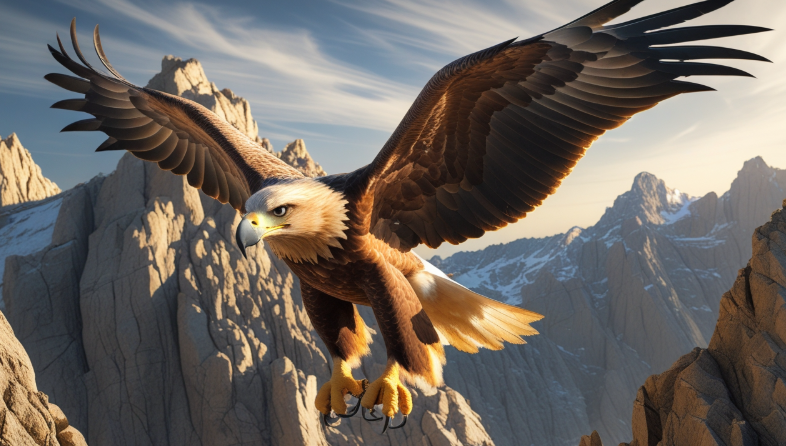
The Golden Eagle – King of the Mountain Skies

High above frozen cliffs and rocky peaks, a magnificent figure glides with royal confidence. This is the Golden Eagle—a fearless raptor known for its sharp vision, immense power, and commanding presence. Among mountain-dwelling birds, few display the same mastery of air and altitude.
A Bird Designed for High Mountain Altitudes
Golden Eagles prefer places where the earth rises dramatically—mountains, cliffs, rugged valleys, and sprawling highlands. These landscapes offer strong updrafts that help the eagle glide thousands of feet without heavy flapping. Their wings, stretching up to 7 feet, act like natural gliders.
Although the air becomes thinner at higher altitudes, Golden Eagles are well-built for it. Their massive chest muscles, efficient lungs, and wide wings allow them to soar for hours in cold winds. Riding warm air spirals, they climb the sky with minimal effort before plunging downward with incredible speed.
Ultra-Sharp Eyesight: Spotting Prey From Miles Above
One of the Golden Eagle’s greatest strengths is its vision. They can detect movement from more than 3 kilometers away. Their eyes contain an extremely high number of light-sensitive cells, allowing them to see tiny details even in dim light.
From high above, they can spot:
- Rabbits running between bushes
- Snakes hiding between rocks
- Ground squirrels emerging from holes
This level of sight gives them one of the most powerful long-range visions in the animal kingdom.
Hunting Style: Fast, Strategic, and Fearlessly Precise
Golden Eagles hunt with a combination of speed and strategy. During a steep dive, they can reach more than 240 km/h, striking prey with overwhelming force. Their talons act like steel hooks, gripping tightly within seconds.
Common Prey:
- Ground squirrels
- Hares and rabbits
- Foxes
- Young deer
- Snakes
- Large birds
Surprisingly, Golden Eagles sometimes hunt in pairs—one eagle distracts prey while the other swoops down for the capture. This cooperative strategy shows their intelligence and adaptability.
Why They’re Called “Golden”
Their name comes from the warm, golden-bronze feathers that shine brilliantly on the back of their head and neck. In bright sunlight, this golden shimmer creates a regal glow, earning them a royal reputation.
For centuries, many cultures viewed this golden color as a symbol of courage, honor, and leadership.
Golden Eagle Strength Compared to Other Birds
| Feature | Golden Eagle | Other Large Birds |
|---|---|---|
| Wingspan | Up to 7 ft | Generally smaller |
| Dive Speed | ~240 km/h | Lower in most species |
| Grip Strength | Extremely powerful talons | Moderate |
| Habitat | Cliffs, mountains, rocky peaks | Forests, plains, wetlands |
| Vision | Long-distance, ultra sharp | Less range |
The Golden Eagle’s Role in Mountain Ecosystems
Golden Eagles help keep the ecosystem balanced. By hunting weak or unhealthy animals, they promote healthier populations of small mammals and other species.
Their presence prevents overpopulation of rodents, protecting vegetation and maintaining the natural food chain.
A thriving Golden Eagle population is often a sign of a strong, balanced mountain environment.
A Symbol of Power Throughout History
Throughout history, civilizations admired Golden Eagles and used their image in:
- Royal emblems and crests
- Tribal symbols
- Military banners
- Cultural traditions
They represent bravery, independence, and leadership—qualities that mountain communities still honor today.
Conclusion – The True Ruler of Mountain Skies
The Golden Eagle reigns over the mountains with unmatched elegance and dominance. With incredible eyesight, strong wings, high-speed dives, and fearless hunting skills, it stands among the planet’s most extraordinary birds of prey. More than a hunter, it is a symbol of wild freedom and natural power—ruling every cliff and cloud line it touches.