The Science Behind Cat Zoomies: Why Cats Suddenly Dash Around

If you’ve ever watched your cat run across the house at full speed, jump on furniture, or sprint in circles for no reason, you’ve seen the cat zoomies. These spontaneous bursts of energy, called Frenetic Random Activity Periods (FRAPs), are perfectly normal — and surprisingly meaningful.
What Are Cat Zoomies?
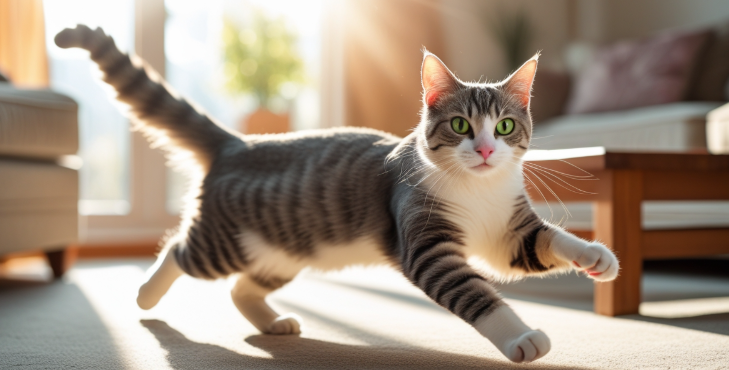
Zoomies are short episodes of high-speed running, jumping, meowing, or sudden playful chaos. They only last a few minutes but reveal a lot about your cat’s instincts and emotional state.
Common Zoomie Behaviors
- Sprinting from room to room
- Jumping onto shelves or tables
- Running in zigzags or circles
- Puffed-up tail
- Loud meowing
Why Cats Get Zoomies
1. Built-Up Energy
Cats sleep 12–16 hours daily. When they wake up energized, zoomies help release stored energy — similar to how wild cats behave between hunts.
2. Natural Hunting Instincts
Even indoor cats have strong prey-chasing instincts. Zoomies mimic the movements of chasing, escaping, and practicing hunting skills.
3. Emotional Triggers
Excitement, stress, happiness, or sudden noises can all spark zoomies. It’s your cat’s way of processing emotions through movement.
4. Post-Litter Box Zoomies
Many cats dash around after using the litter box due to relief or instinctively moving away from their scent — something wild cats do for safety.
5. Age-Related Zoomies
Kittens and young adults experience zoomies more often due to higher energy levels. Older cats still get them, usually from sudden excitement or nighttime restlessness.
Do Cats Get Zoomies at Night?
Yes. Cats are naturally more active during dawn and dusk. A quiet house at night often activates their playful instincts.
Are Zoomies Healthy?
In most cases, yes. Zoomies show your cat is physically active and mentally stimulated. However, excessive zoomies may signal boredom, stress, or lack of exercise.
How to Reduce Excessive Zoomies
1. Increase Play Sessions
Give your cat 20–30 minutes of active play daily using feather toys, laser pointers, or interactive balls.
2. Provide Mental Stimulation
- Cat trees
- Scratching posts
- Window perches
3. Keep a Consistent Routine
Regular feeding and play times help reduce sudden energy spikes.
Zoomies Comparison Table
| Type of Zoomies | Signs | Meaning |
|---|---|---|
| Normal Zoomies | Short bursts, playful | Healthy energy release |
| Night Zoomies | Running at midnight | Natural active cycle |
| Bathroom Zoomies | Sprints after potty | Instinct or relief |
| Stress Zoomies | Tense posture, hiding later | Emotional trigger |
| Pain-Triggered Zoomies | Crying, licking, grooming | May require vet attention |
Are Zoomies a Sign of Happiness?
Yes — most zoomies indicate that your cat feels safe, playful, and comfortable at home.
Final Thoughts
Zoomies may look random or chaotic, but they’re driven by instinct, biology, and emotions. They help cats burn energy, practice hunting skills, and express joy. As long as your cat seems healthy, zoomies are a perfectly normal — and adorable — part of feline life.