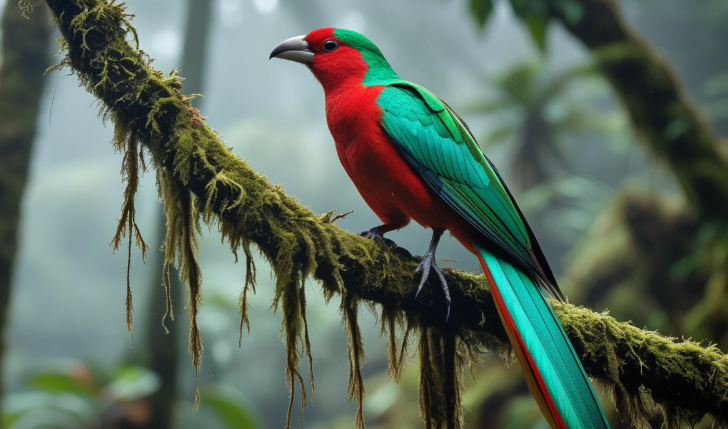

The Harpy Eagle – King of the Rainforest Canopy

Deep within the lush rainforests of Central and South America lives a bird so powerful and majestic that it has earned legendary status—the Harpy Eagle. With storm-gray feathers, towering height, and claws resembling those of an ancient predator, this eagle is considered the most formidable raptor in the Western Hemisphere. Its silent flight and precision hunting make it the true ruler of the rainforest canopy.
This guide explores the Harpy Eagle’s appearance, behavior, diet, and the conservation challenges that shape its future.
A Giant Among Birds of Prey
The Harpy Eagle ranks among the world’s strongest and heaviest eagles. Its sheer size makes it stand out even among large raptors.
| Feature | Measurement / Description |
|---|---|
| Wingspan | Up to 7.5 ft (2.3 m) |
| Weight | 6–9 kg (females are larger) |
| Claw Length | Up to 13 cm—longer than a grizzly bear’s claw |
| Height | 90–107 cm |
Their massive talons deliver a crushing grip strong enough to overpower monkeys and sloths instantly.
A Hunter Designed for the Forest
While many eagles soar over open land, the Harpy Eagle is a specialist of dense rainforest environments. It hunts in the canopy—the overlapping branches high above the ground where light and shadow blend.
Key Hunting Adaptations
- Short, broad wings for tight maneuvering between trees
- Silent flight for stealth attacks
- Extremely strong legs for powerful downward strikes
- Crest feathers that assist with sound detection
Rather than pursuing prey over long distances, the Harpy Eagle prefers ambush-style hunting. It perches quietly, watching with keen eyes, then launches a sudden and devastating strike.
What the Harpy Eagle Hunts
This eagle specializes in hunting arboreal animals—creatures that spend most of their lives in the treetops.
- Two-toed and three-toed sloths
- Howler and capuchin monkeys
- Iguanas
- Opossums
- Large birds such as macaws
Its talons can capture prey heavier than the eagle itself, carrying it to a safe branch for feeding.
Family Life High in the Trees
Harpy Eagles construct enormous nests in giant emergent trees—platforms often more than a meter wide and 40–50 meters above the forest floor.
| Aspect | Detail |
|---|---|
| Breeding Frequency | Once every 2–3 years |
| Clutch Size | Usually one egg |
| Incubation | Approx. 55 days |
| Chick Care | Parents feed the young for up to 10 months |
| Juvenile Independence | Around 1.5 years old |
Their slow reproduction rate is a major factor contributing to their vulnerability.
The Harpy Eagle’s Role in the Ecosystem
Harpy Eagles help maintain balance by regulating populations of canopy mammals such as monkeys and sloths. This indirectly supports forest regeneration because these animals often eat young leaves and seeds. Healthy eagle populations indicate a thriving rainforest.
Threats and Conservation Challenges
Despite their power, Harpy Eagles face significant threats:
- Loss of rainforest habitat from logging and agriculture
- Reduction in prey species
- Human hunting due to fear or myths
- Slow reproductive cycle
Conservation groups focus on protecting nesting areas, restoring habitats, and educating local communities. In some regions, reintroduction programs help stabilize declining populations.
Why the Harpy Eagle Captivates the World
With its fierce beauty and extraordinary hunting abilities, the Harpy Eagle has become a global symbol of rainforest strength and resilience. Many cultures view it as a guardian spirit. Its continued survival reflects the overall health of the ecosystem—when the Harpy Eagle thrives, the forest thrives.